



Partizan: Russia's Iconic Camo Pattern
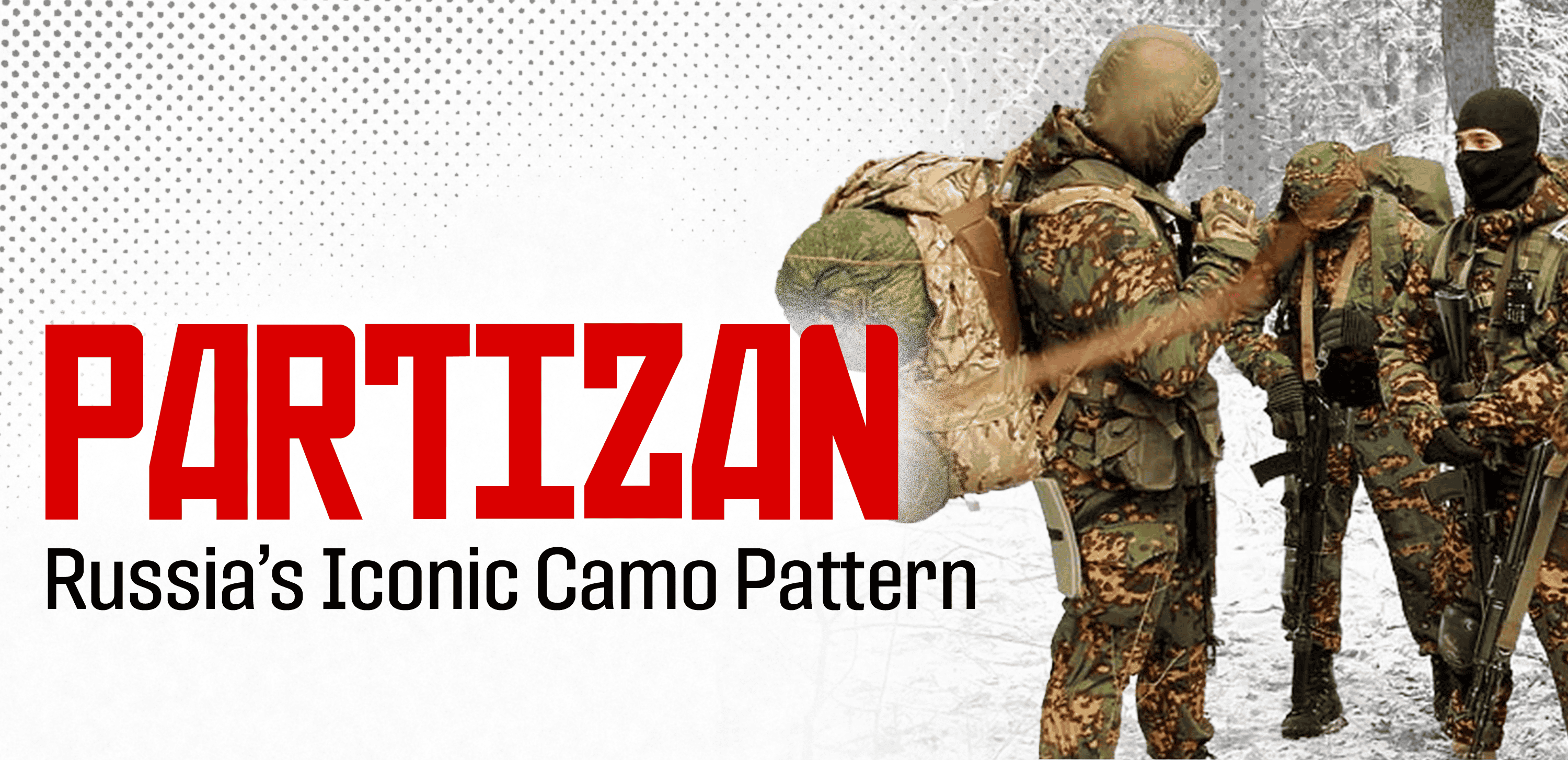
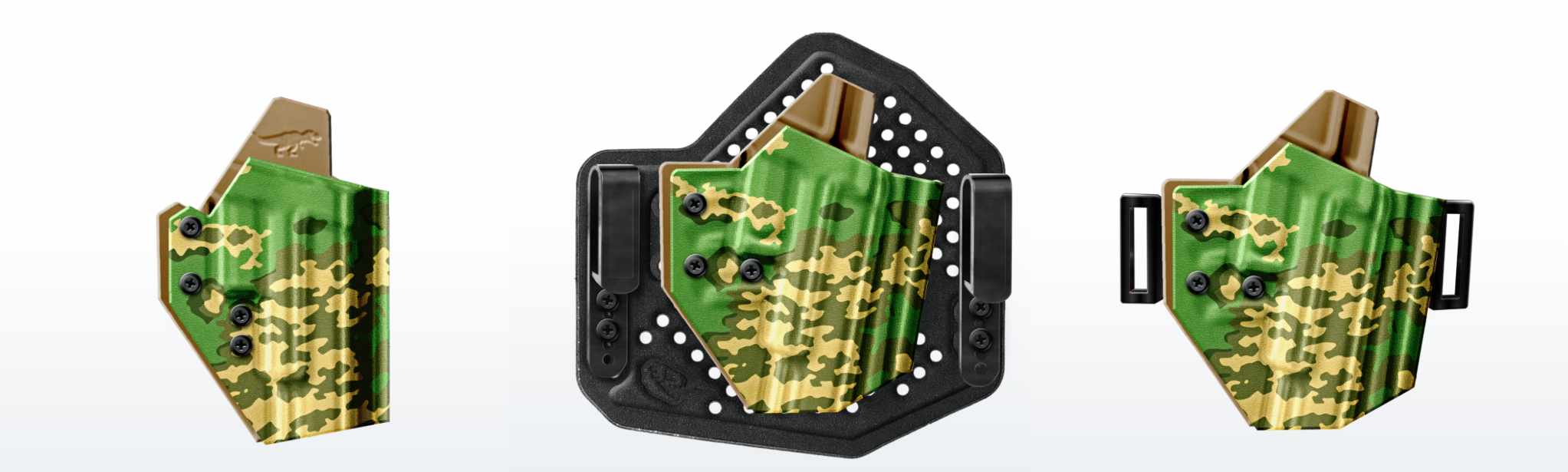
"Partizan camo" usually refers to a woodland camouflage pattern called SS-Leto, usually seen on oversuits initially worn by Russian special operations units such as FSB Alfa, Vympel, and others. Given how Russian security forces are, you can now find it across all sorts of units and formations (usually alongside a mix-and-match array of patterns like something from a tactical thrift store), including the MVD, SOBR, and others (and for a limited time, T.REX holsters). But it is also a whole family of tactical garments, a fact which often creates confusion and even contradiction.
Russian Partizan Camo
It's strange to say, but my two favorite Soviet/Russian camouflage patterns aren't really camo patterns at all. Doesn't make a lot of sense, but there it is. The first, of course, is 84 RDC (1984 Pattern Red Dawn Camo). That's a name and acronym I just made up, but I don't think it's unjustified. The camouflage they used in the movie was also made up, though inspired by the USSR's actual KLMK camo. The other is Russian Partizan camo, which is real and frequently worn but isn't actually a camouflage pattern either. It's actually a garment (maskhalat). The pattern itself is called SS Leto.
I was actually just yesterday years old (as of this writing) when I learned that. Bring it in, take a knee, and permit me to explain.
Cammie Patterns: Are They Colors or Clothes?
The answer to the question above is yes, yes they are.
Once upon a time, all branches of the US military wore a standardized combat uniform (the Battle Dress Uniform or BDU) and its arid-environment counterpart, the DCU (Desert Camouflage Uniform). The camouflage pattern used on BDUs was M81 Woodland. Because that uniform and camo pattern were introduced at the same time and worn for a couple of decades, the terms became synonymous. People would say BDU to mean the actual four-color contrast pattern, much as some said cammies to mean the BDU. The same thing happened later with the ACU (Army Combat Uniform), which was printed in UCP (Universal Camouflage Pattern).
Almost no one used UCP, because ACU almost immediately became the colloquial moniker for UCP. That is, when they weren't calling it "gravelflage," "couch-o-flage," or worse. (Note that the ACU is still what soldiers wear. Except now they're in the Operational Camouflage Pattern (OCP), which most of us still incorrectly call MultiCam.)
But I digress. Partizan is the garment, and SS Leto is the camouflage pattern, but don't worry (not that you were), if you say "Partizan camo", everyone will know what you mean. Even if you're referring to SS Leto on a Gorka or Sumrak (two other oversuit styles).
SS-Leto
The name SS Leto directly translates to "SS-Summer", and yes, by SS they mean Schutzstaffel: Waffen-SS. That's because the pattern is directly descended from Germany's WWII Oak Leaf camo pattern (Eichenlaubmuster), though the coloration has been modified.
Leto is Russian for Summer. The uniform is so named for the pattern's green and yellow hues. There are also SS-Osen (Autumn) and SS-Vesna (Spring), but as best I can tell, everyone refers to them all as Partizan or SS Leto.
To make matters more complicated, there's also a Partizan-M, a copy of a different German camo pattern that is still called Partizan.
The first of the SS-Leto patterns were probably issued in late 2003 or early 2004. We know there were operators wearing it at the Beslan school siege, for instance, and it's been seen in Dagestan, Georgia, Ossetia, Crimea, Ukraine, and other places since then. It's difficult to pin down exactly when and where various patterns were deployed because so many archivists, commenters, and collectors play fast and loose with camouflage names and garment types.
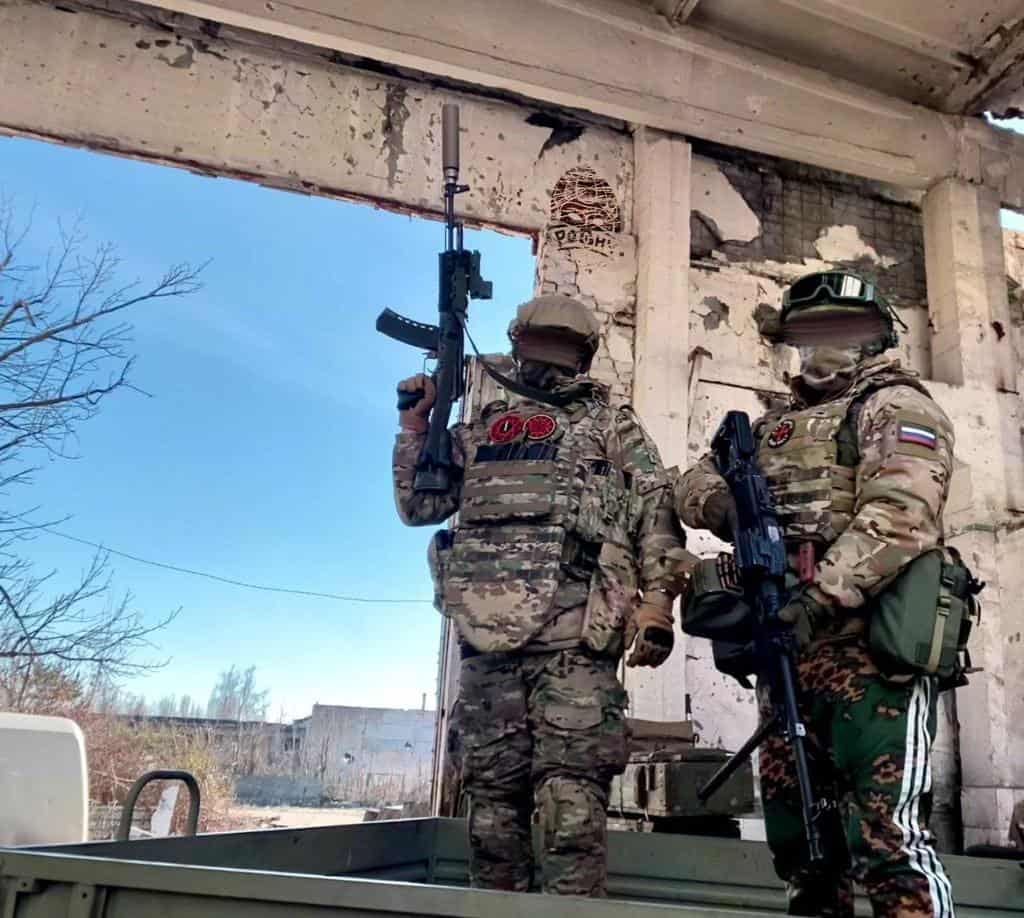
A Partizan suit doesn't necessarily mean Partizan camo. It could just as easily be Berezka, Spectre, A-TACS FG, the Russian version of MultiCam, or any of several other patterns.
If you think the United States has a confusing lineup of camouflage, you should try cataloging the Russian Federation's.
The SS-Leto Look
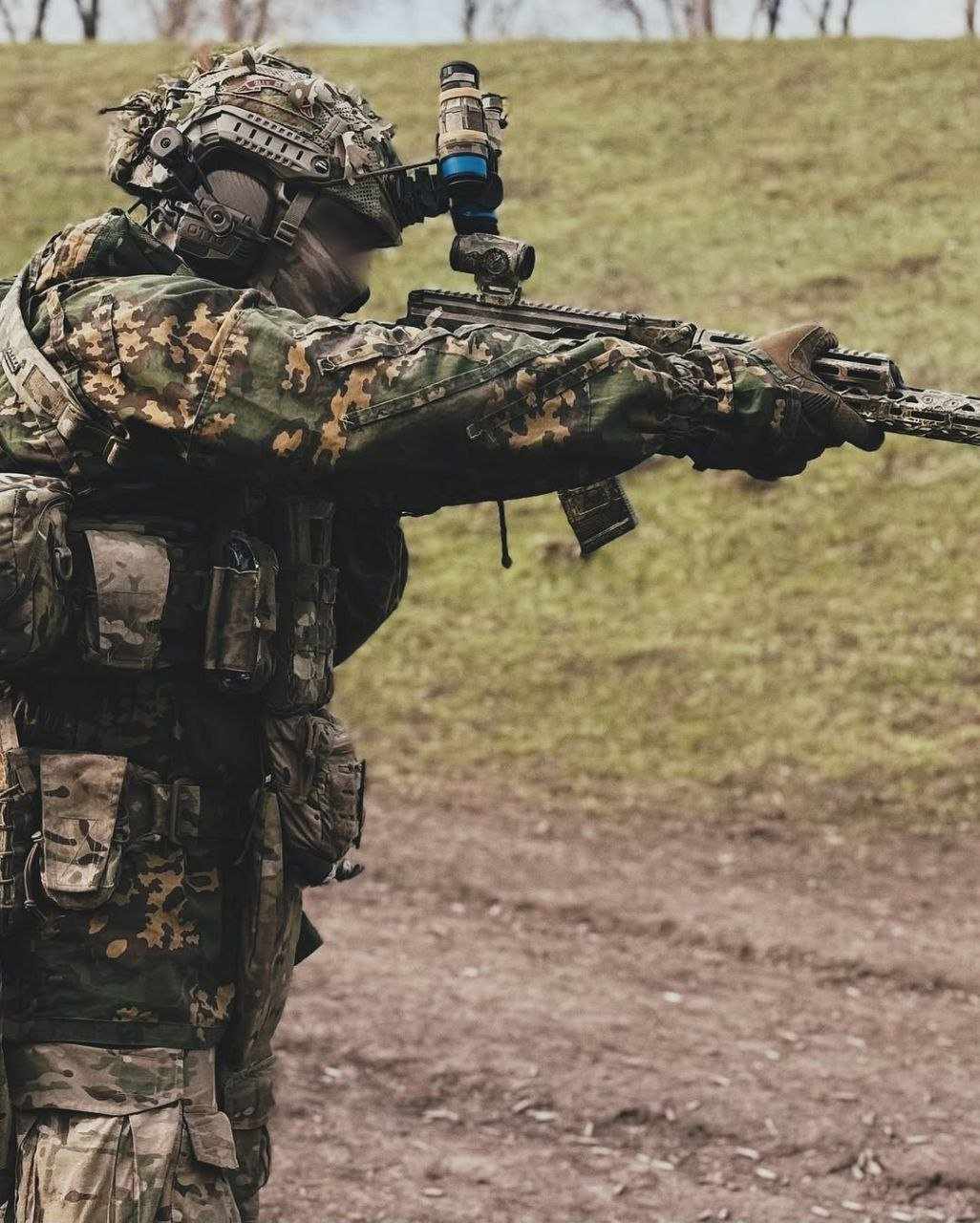
The whole point of SS-Leto (and most any camouflage except maybe UCP) is to break up outlines and aid in concealment. The classic SS-Leto look, most commonly described as Partizan, was designed for use in woodland terrain. As such, it is a surprisingly vibrant pattern, almost a lime-green with a faint yellow tint as the background. On top of that are leaf shapes (designed to blend in with spring and summer foliage), blotches of mid-tone forest green, some charcoal brown and dark olive for contrast (to break up a silhouette), and a scattering of tan (maybe ochre?) as a final touch.
This is not a digital pattern (like our MARPAT, Canadian CADPAT, or Russia's own Edinaya maskirovochnaya rascvetka (EMR, or "Unified Camouflage Coloration")). Nor is it a blob or amoeba-type pattern like M81 Woodland. SS-Leto uses small, raindrop-like flecks against a jagged, slightly pixelated background of oak leaf clusters.
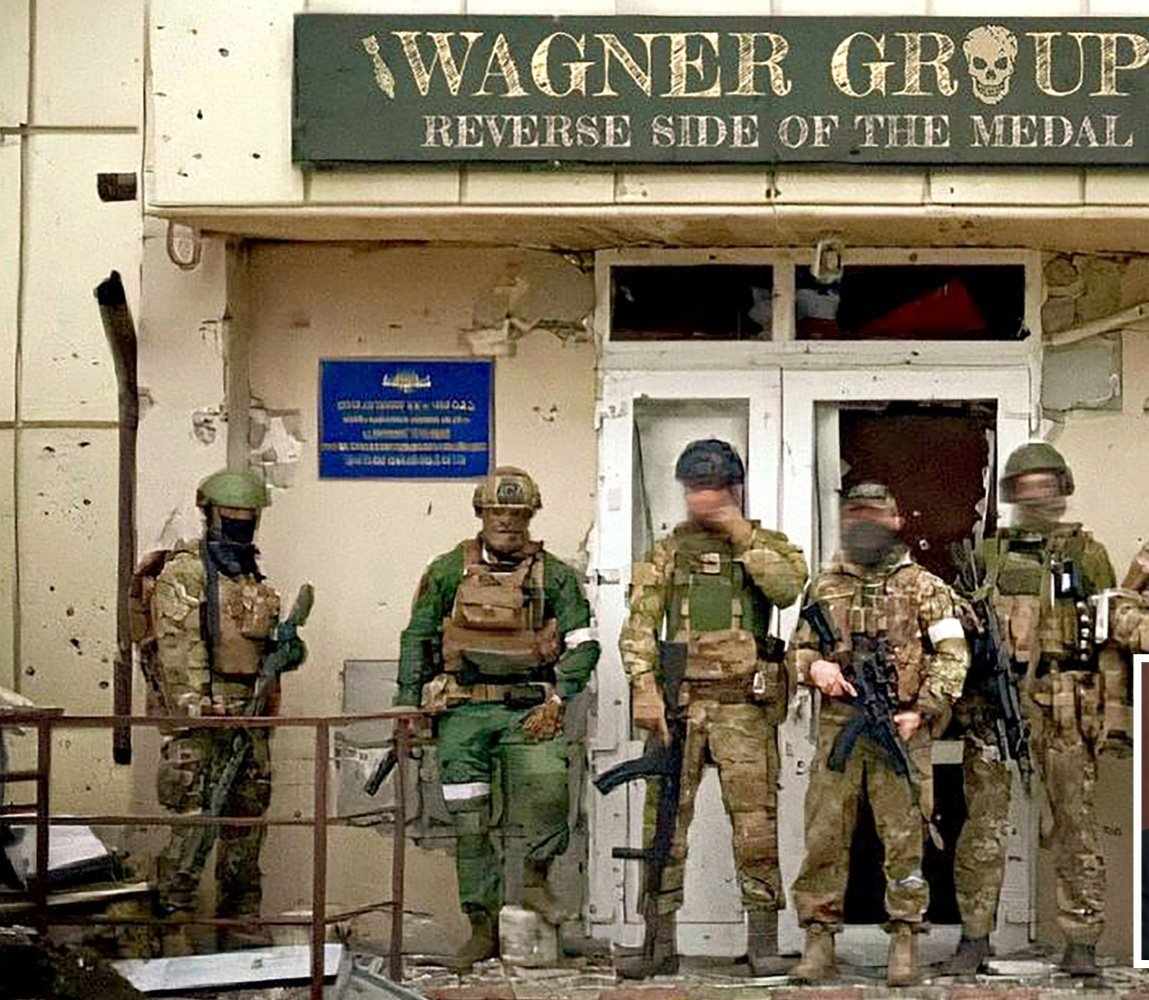
By most accounts, it is an effective pattern, though that often depends on the quality of the troops wearing it. It is currently in use across the entire Russian military and gendarmerie-style formations (including, interestingly enough, some of their prison units and their Federal Drug Control Service), though not as ubiquitously as EMR.
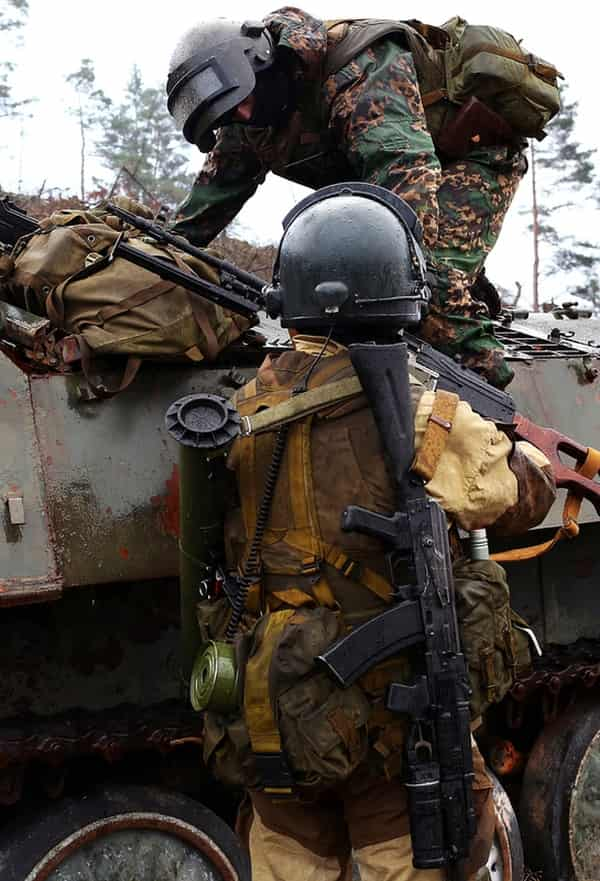
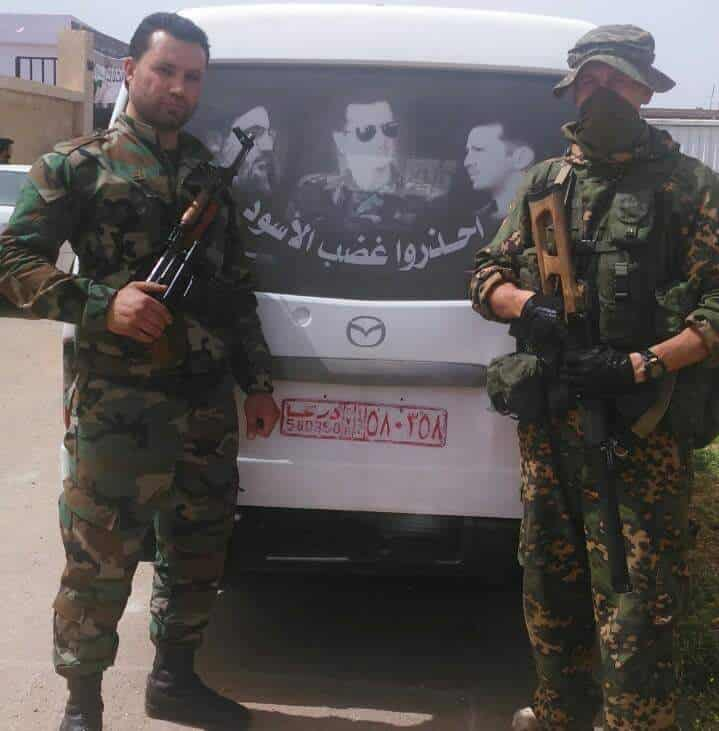
Pro-Russian elements, both national (Belarus) and volunteer/informal (PMCs, penal units, etc.), also wear SS-Leto in one form or another. There have even been reports of North Korean troops wearing it in the war with Ukraine, but I haven't yet found any evidence of that being a widespread use.
Many Partizan garments bearing Partizan camo are reversible, with a green SS-Leto surface paired with the more earthy-toned and muted SS-Osen (Autumn) on the opposite side.
You can see a de facto field test of Partizan camo here on Reddit, if interested. Kommando Store has a short article about it on their site, and one of the best resources out there is Camopedia.
If you have a few minutes, you'll easily pick out SS Leto, along with elements of other Russian Federation and allied camo patterns, in the following video.
(Warning: Contains combat footage, though it's not graphic.)