
Big Iron: The World's Biggest Handguns
The usual answer to getting more power out of a handgun is to step up to a long gun. But sometimes the bulk of a long gun is not a viable option. From the Colt Walker to the Pfeifer Zeliska, this is how gun makers have sought to pack more power into compact packages…
Though “compact” in this particular case is a big misnomer.
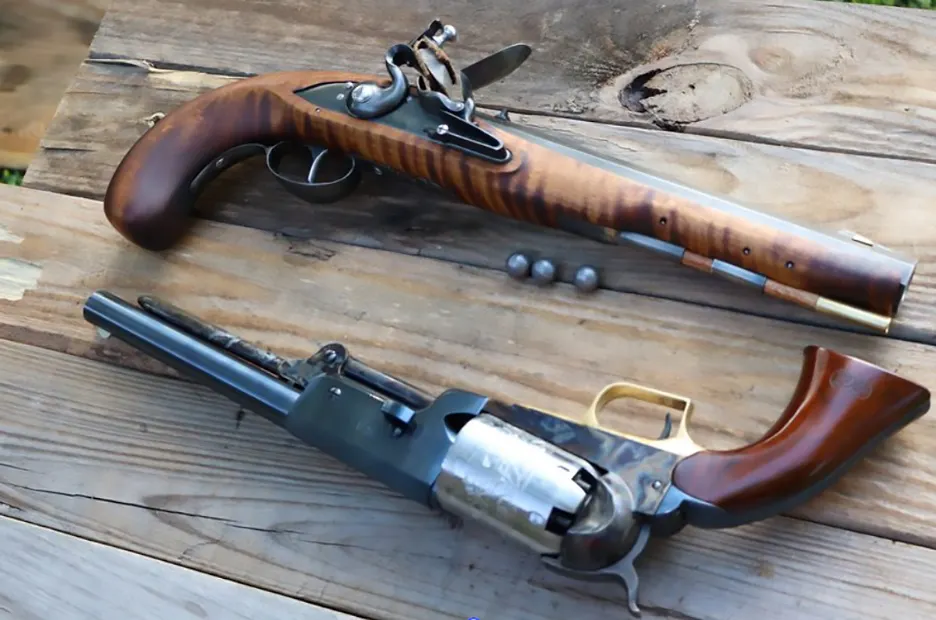
Below you’ll find examples of some of the biggest pistols around. None of these are necessarily the most powerful handgun ever produced, but they’re definitely among the largest.
1. The Colt Walker .44
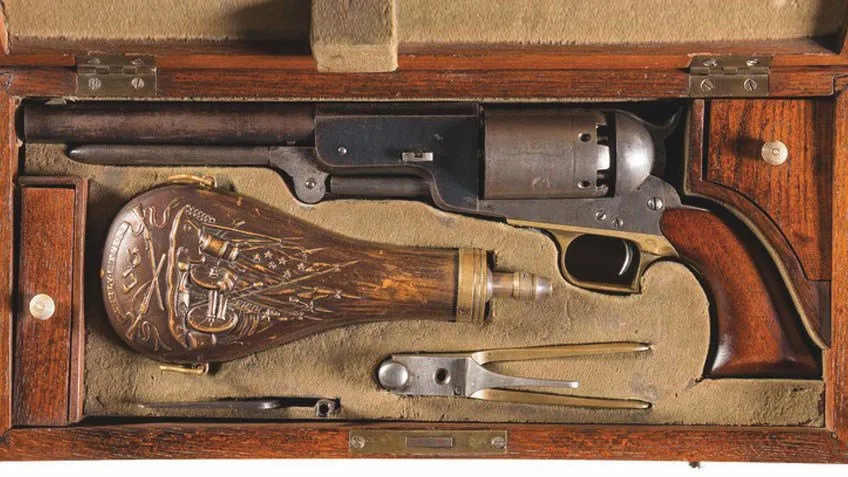
The Colt Walker holds the distinction of being the most powerful handgun fielded by the US Army. Samuel Colt did not succeed with his first revolver, the .28-.36 caliber Paterson models, in the 1830s. He was coaxed back into business during the Mexican War thanks in part to the prodding of Texas Ranger Captain Samuel Walker. The Walker Colt was a .44 caliber six-shooter that tipped the scales at nearly five pounds. It had an enormous cylinder meant to take a carbine load's worth of powder, a 60-grain charge over a 245-grain conical bullet or 148-grain round ball. With a velocity of over 1,200 feet per second, the Colt Walker generated .357 Magnum levels of energy over 80 years before that cartridge even existed.
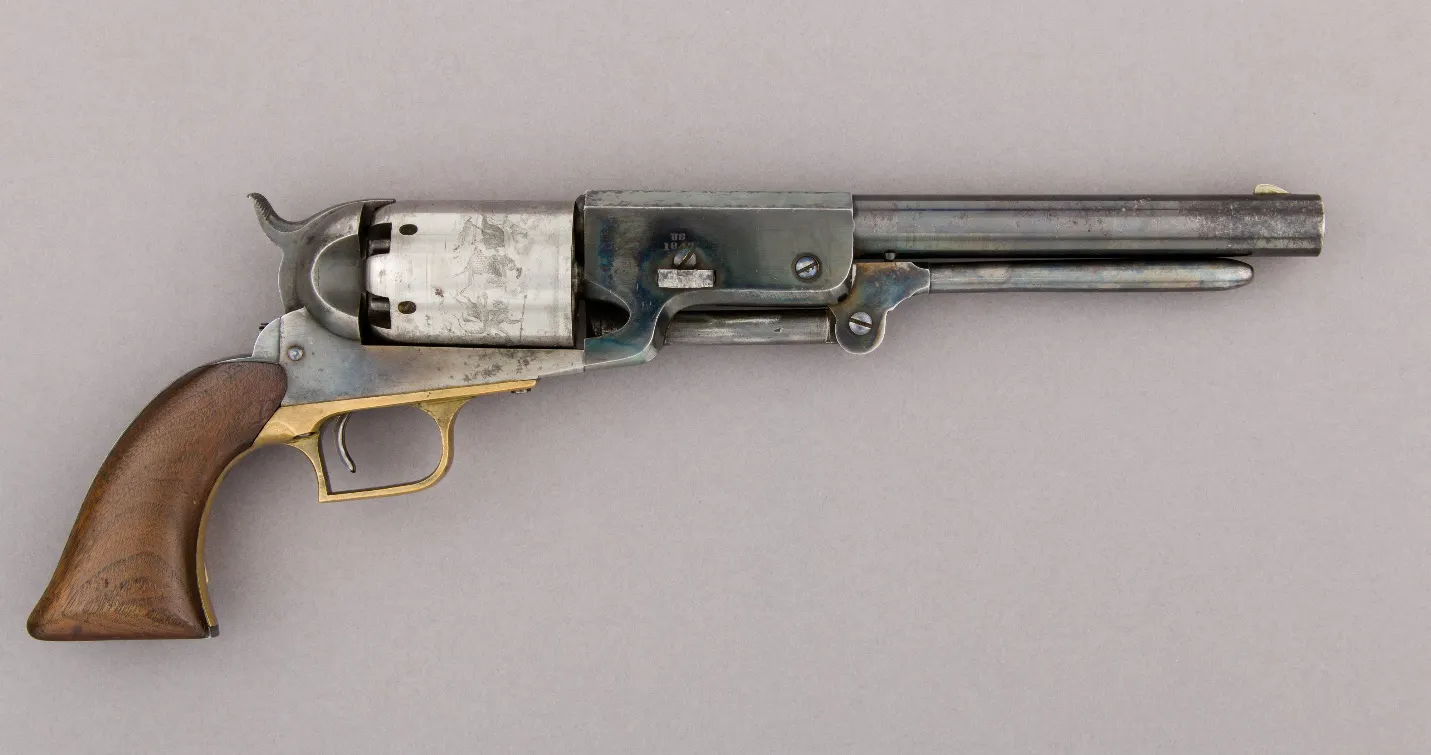
Only 1,100 were made during the Mexican War and few survive today because as many as a third of them blew up in the field, as the wrought iron cylinders could not always handle a full load. But the revolver's modest success convinced the Army to give up single-shot pistols and move toward Colt's improved designs.
2. The Howdah Pistol
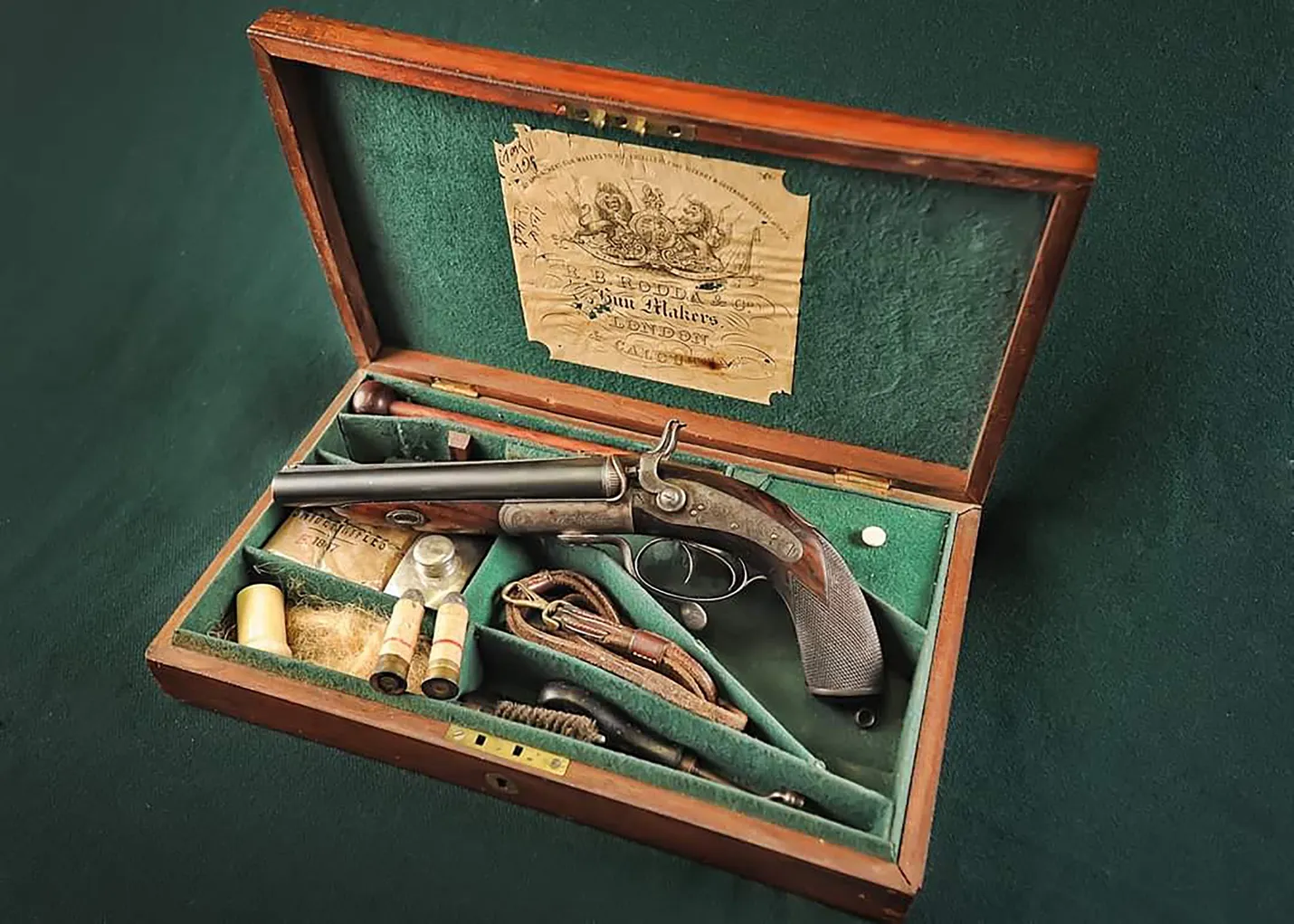
The howdah pistol is a type of pistol, rather than a fixed SKU in a catalog. Howdah pistols, as a term, were big-bore pistols that gained popularity in British India among explorers and big-game hunters. The howdah name refers to a large basket mounted on the top of an Asian elephant, where the elephant handler and hunter perched. The howdah pistol was a last-ditch self-defense tool against Bengal tigers, which could easily scale up the elephant and into the howdah.
Single-shot and double-barreled muzzleloader pistols were used for this purpose since the 1790s, but gun makers in London and Birmingham refined the type in the 1860s and 1870s. These included famous names like Purdey and Holland & Holland, as well as Lancaster, who developed a four-barreled over-under design.
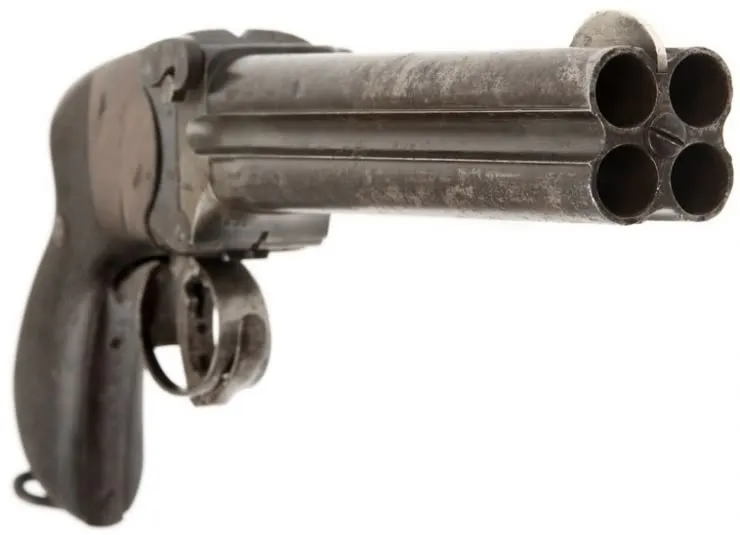
Perhaps the ultimate were models chambered in .577 caliber, a shortened Snider-Enfield cartridge using a 450-grain conical bullet—a round not dissimilar to what was used in rifled muskets during the American Civil War. The howdah pistol gradually faded into obscurity as hunting from elephant-back fell out of fashion and practical revolvers like the Webley Mk. series came into India.
3. The Pfeifer Zeliska .600 Nitro Express
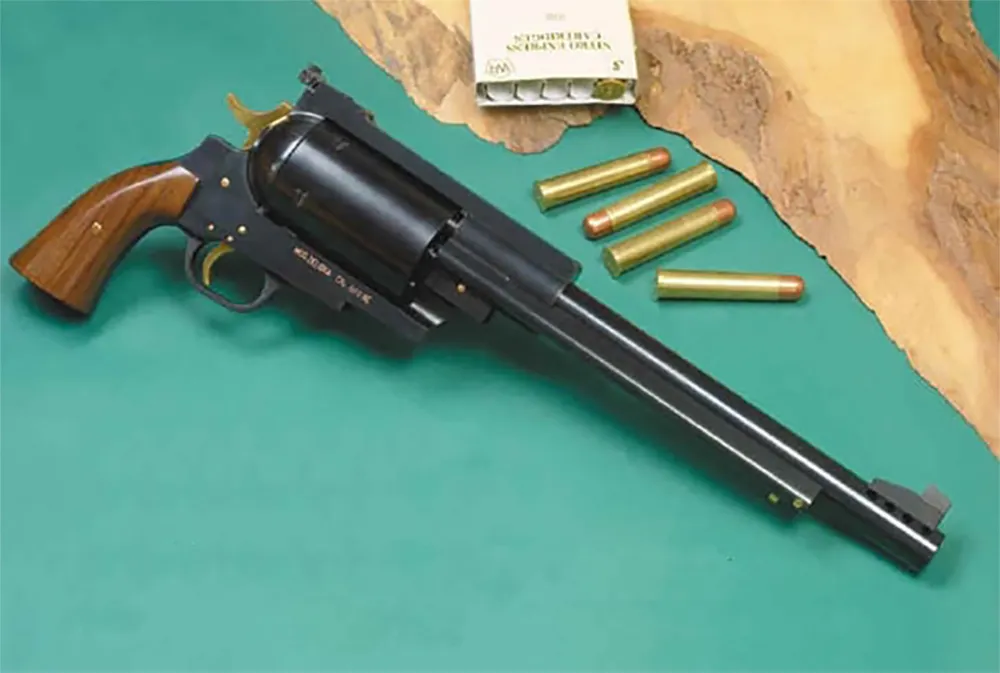
From one 19th-century safari queen to another in the early 21st century, we have the Pfeifer Zeliska. Produced by the Austrian firm Pfeifer Waffen, it is an upsized Colt Single Action revolver clone designed to fire big-bore rifle cartridges. Weighing over 13 pounds, the Pfeifer Zeliska makes the Colt Walker and howdah pistols look portable. It features a five-shot cylinder and is loaded via a loading gate on the right side of the handgun. It chambers magnum big-game cartridges including the .458 Winchester Magnum and the .600 Nitro Express—the latter of which is so large to be classified as a destructive device here in the United States.
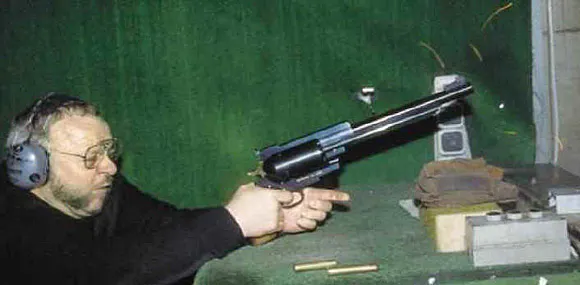
First produced at the turn of the 20th century, the .600 was a favorite among dangerous-game hunters in Africa. It uses a nominal 900-grain bullet traveling at just under 2,000 feet per second. It would not be eclipsed until the release of the ridiculous .700 Nitro Express in 1988, but it is still a no-joke round, particularly out of a relatively light handgun. Thankfully for our wrists, the Pfeifer Zeliska is only produced intermittently and in small volumes.
4. The Desert Eagle
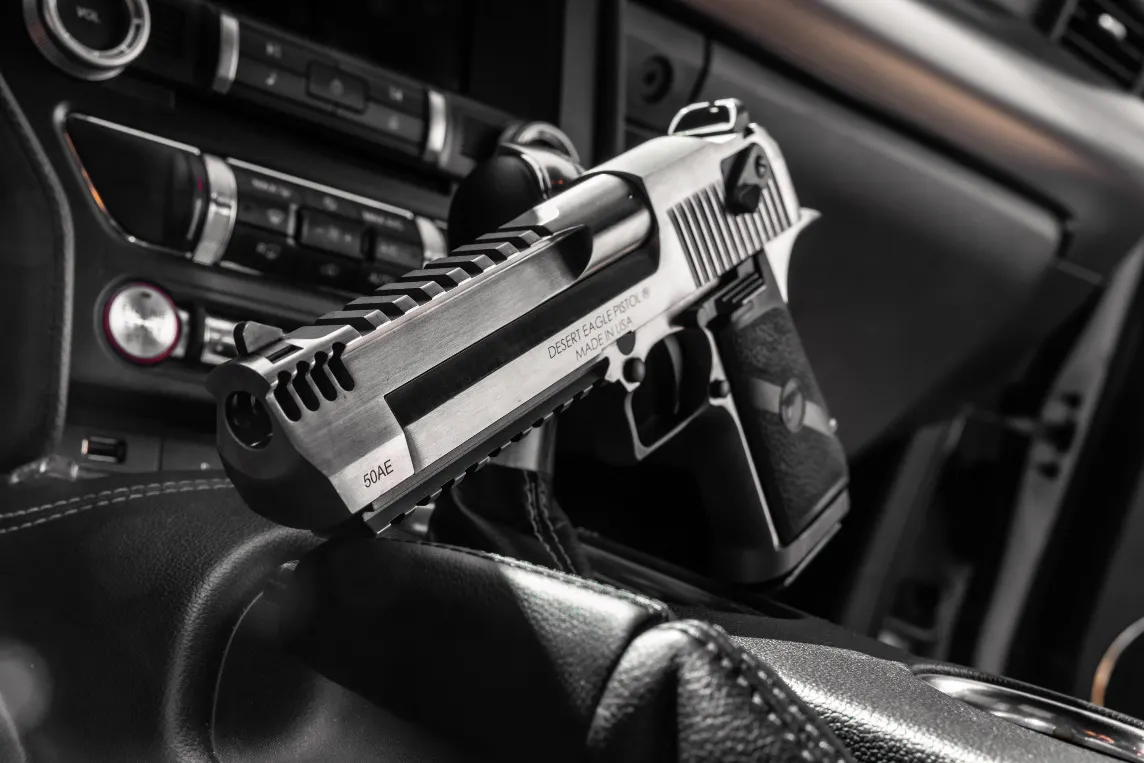
Magnum Research of Fridley, Minnesota, designed the Desert Eagle pistol in the 1970s with the idea of bringing magnum power out of the revolver realm into that of an autoloading pistol that has greater capacity and a faster reloading process. IMI produced the design from 1979 until 1995. Ultimately, IWI was spun off from IMI, while Desert Eagle production moved back to Magnum Research in the USA, which has since come under the Kahr Arms umbrella, where the Desert Eagle remains in production. The Desert Eagle comes in a variety of configurations, from a lightweight .357 Magnum version to the classic large frame models in .44 Magnum and .50 Action Express.
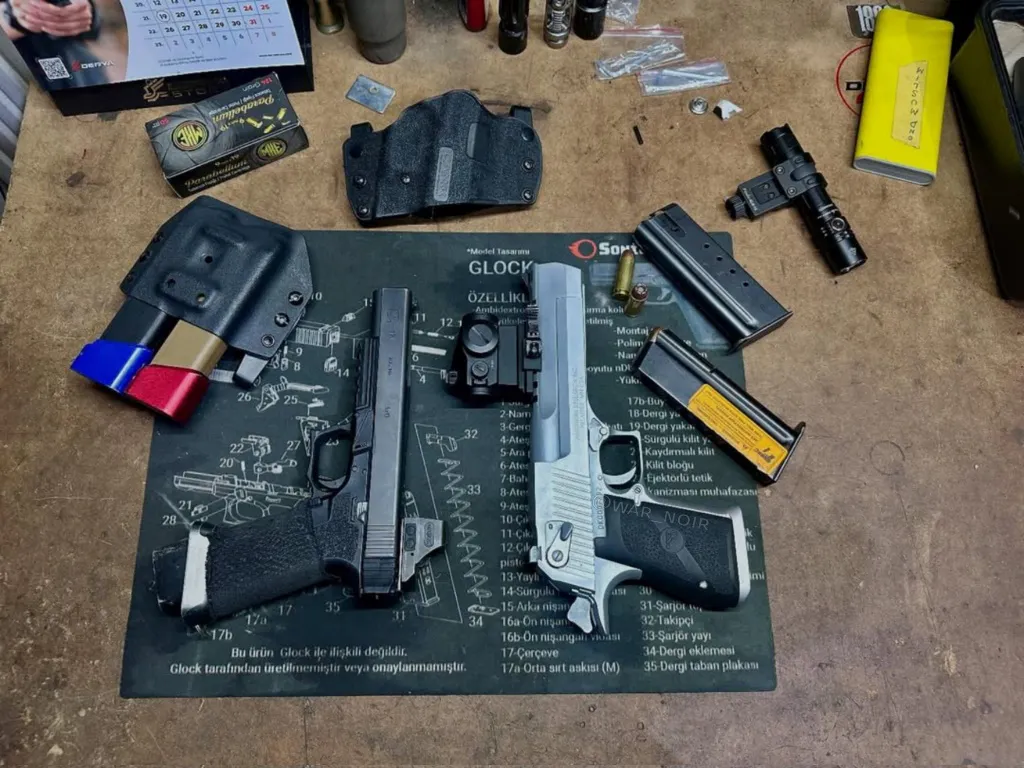
The Desert Eagle in its classic configuration weighs as much as 4.4 pounds and holds up to a capacity of 9 rounds of .357 Magnum or up to 8 rounds of .44 or .50 caliber ammunition. Its size, power, and unique rotating-bolt gas operation have made it a movie and media icon, despite the design's practical limitations.
The .357 Magnum and .44 Magnum models use conventional rimmed revolver ammunition that is known for malfunctions. However, the rimless .50 AE and .429 DE have a track record of reliability in this big, cantankerous pistol. It remains the most powerful one can get in a magazine-fed handgun.
5. The S&W 500
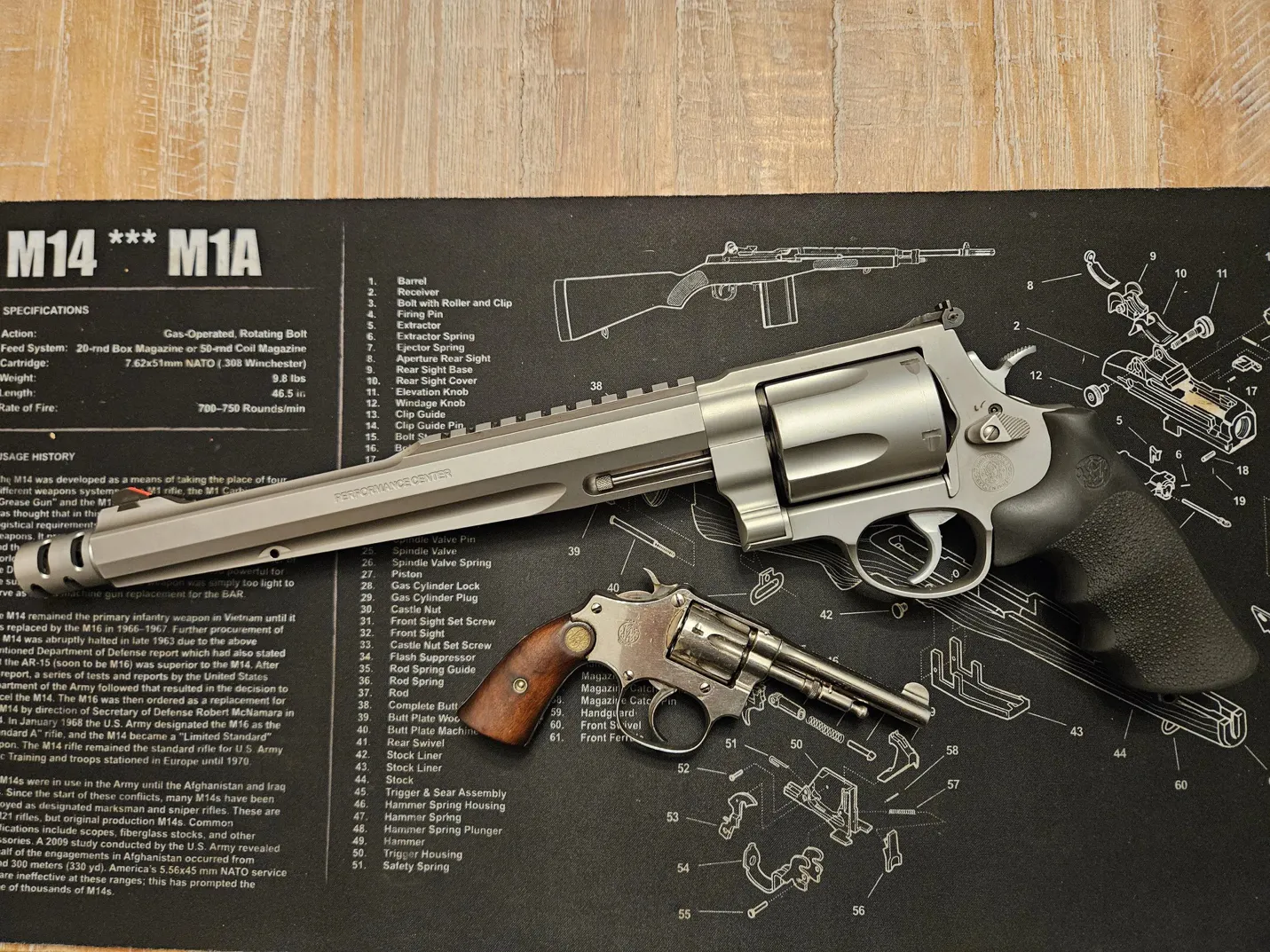
Smith & Wesson is known for its magnum revolvers. Their .357 Magnum and .44 Magnum revolvers are famous the world over for several reasons, including size. Finally, in 2003, Smith & Wesson released the .500 S&W Magnum in the S&W 500 revolver. Built on an entirely new X-frame, the 500 is a double-action revolver with a massive five-shot cylinder that comes stock with a muzzle brake and massive rubber grips to absorb the shock when that .500 round is touched off.
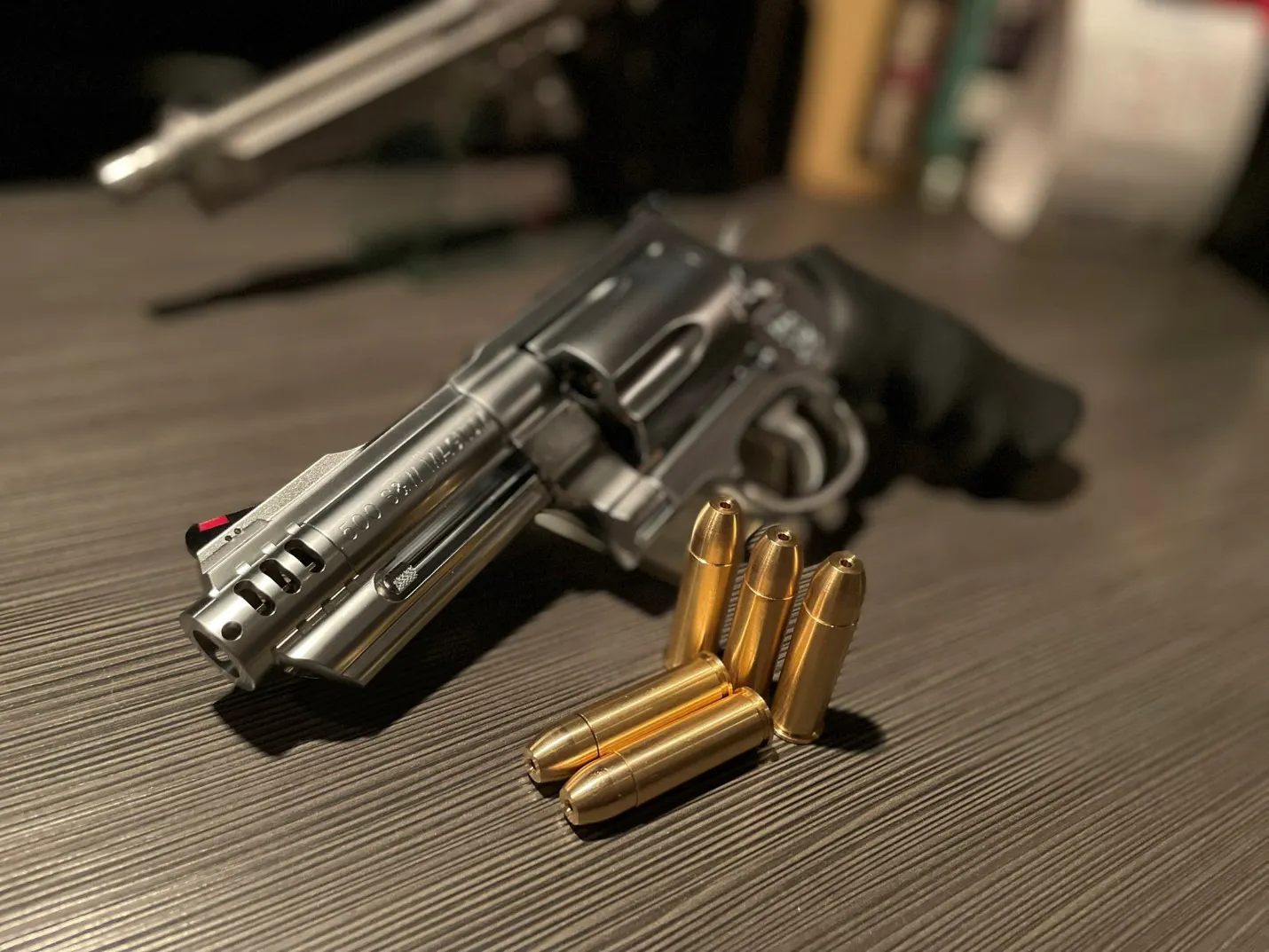
The .500 S&W Magnum was intended to recapture the title of "the most powerful handgun in the world," and it certainly did so in the world of mass-produced handguns. Recoil enthusiasts and big-game hunters have flocked to the massive .500. It uses a true .50 caliber bullet ranging from 300 to 700 grains at speeds from 1,200 to 2,000 feet per second. The round's flexibility and its semi-rimmed design have since given it crossover appeal in some long guns like the Big Horn Armory Model 89.
6. The Magnum Research BFR
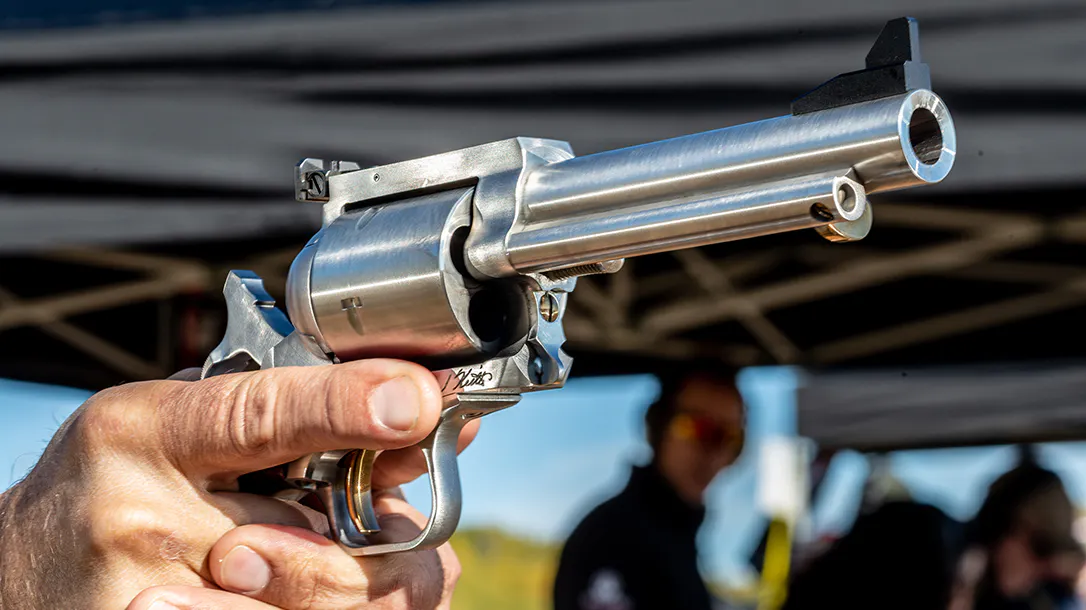
Don't bite your tongue when you hear about the Magnum Research BFR. It stands for Biggest Finest Revolver, and its power just might throw you off balance. In addition to designing the Desert Eagle, Magnum Research has produced one of the finest Colt single-action clones, capable of handling stout cartridges.
Today, Magnum Research operates under Kahr Arms and continues to produce the Biggest Finest Revolver in short-cylinder and long-cylinder models. These five- or six-shot gate-loading revolvers can chamber conventional rounds like the .357 Magnum and .44 Magnum, as well as real barnburners like .475 and .500 Linebaugh. The long-cylinder model digests rifle cartridges ranging from the venerable .30-30 all the way up to the .45-70 Government cartridge.
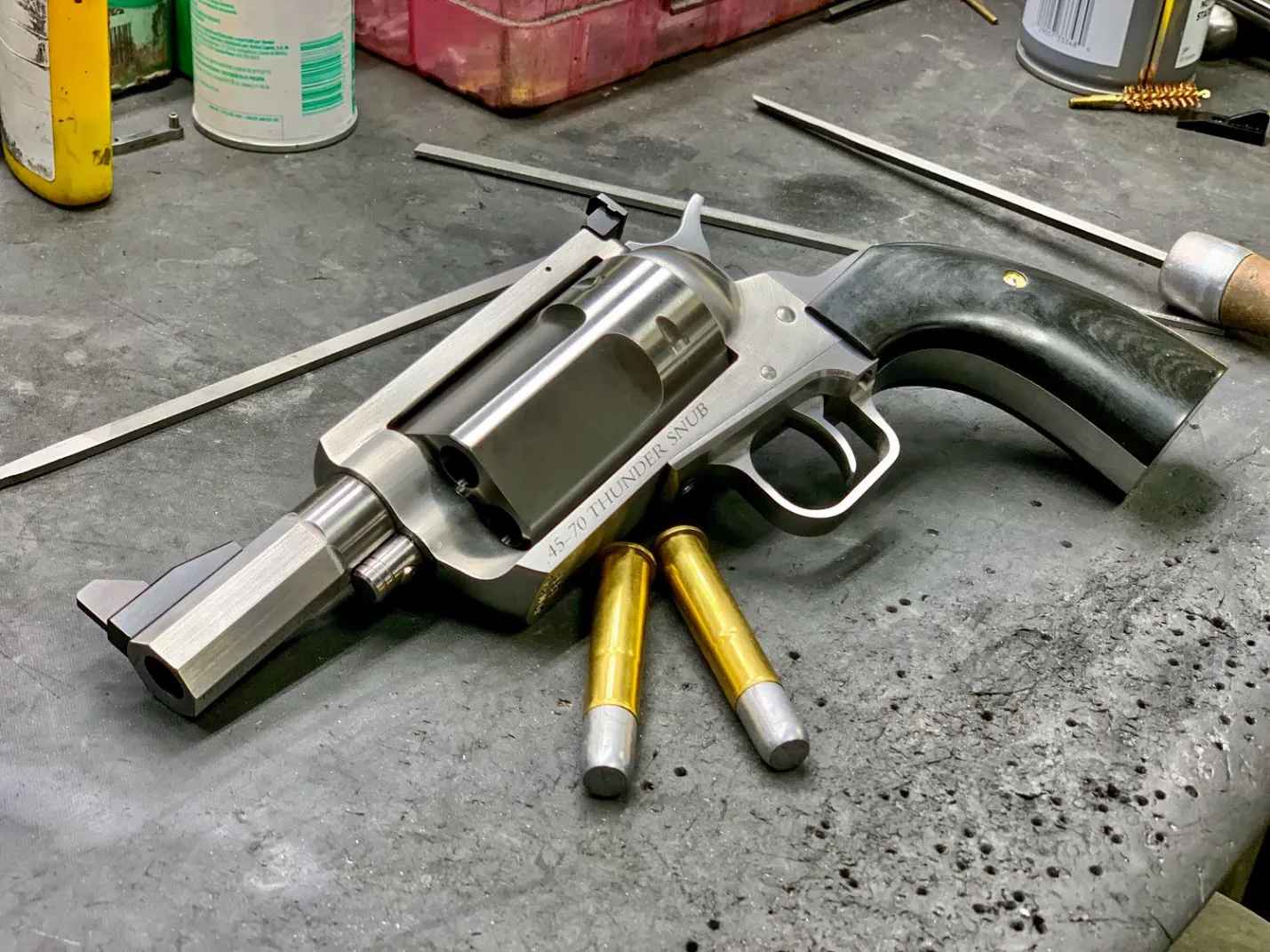
Whether you want the finest .357 single-action that is not a Ruger Blackhawk or cowboy up to a handgun to match your big lever gun, the Biggest Finest Revolver is the one to look at.
These aren’t the only large handguns out there. We didn't even touch on the RSh-12, .475 Wildey Magnum, and others like them.