
How to Pick a Carry Gun
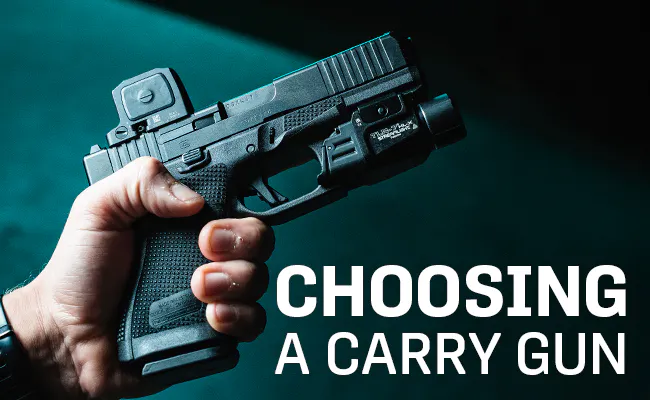
Here at T.REX ARMS we have a library of over 400 firearms and maintain a current Federal Firearms License and SOT. Our brand representatives and team members carry every day. Maybe you came here because you're brand new, or maybe you just want to see what other "gun guys" have to say about this fun, controversial, and practical topic. Either way, we hope it's helpful.
The Bottom Line: Get the biggest 9mm handgun you will carry every day.
The purpose of a defensive handgun is to quickly stop deadly threats. This requires disrupting the central nervous system or major blood flow. And the key to that is (1) good shot placement with (2) adequate penetration.
Consistent, quick shot placement comes with training. But penetration is all about what bullet and cartridge your gun shoots.
Cartridge / Caliber Selection
The FBI standard for adequate penetration is 12+ inches in ballistic gelatin. To achieve that, a proven defensive bullet launched from the 9x19mm Luger cartridge (usually just called "9mm") is the preferred choice among civilian concealed carriers and law enforcement. A few modern .380 cartridges can meet the standard too: .380 Auto is a less powerful round used in very compact pistols.
Why not go with a higher-powered cartridge like .40 or .45? Larger cartridges have more recoil and cost more to shoot, which makes it likely you'll practice less, which will lead to poorer shot placement and slower follow-up shots. 9mm offers enough penetration for human threats, and is relatively inexpensive.
What about "stopping power"? Physics tells us that for every action there's an equal and opposite reaction. The recoil you feel from the gun is the same force exerted by the bullet on the target.1 But that push you feel is distributed over a much larger surface area and more time; that's the difference. No, it's not like the movies, where people magically fly backwards when they get hit. …Unless you're willing to EDC a trampoline.
In the real world, it's all about shot placement and adequate penetration.
Fitting Your Hand
The larger the gun, the easier to control recoil and get back on target for follow-up shots, which with a handgun (puny compared to a rifle) will often be needed.
So you want the biggest handgun you will carry every day. Where on your body you carry, along with wardrobe, will determine how big you can go.
A good "rule of thumb" to start, though, is you want a full grip on the gun. A full firing grip means the lower three fingers of your dominant hand wrapped around the grip with no pinky hanging off the bottom. People with smaller hands can get away with smaller guns. People with bigger hands will be better served by a bigger gun. People with bigger hands are usually larger overall and can conceal a larger gun too.
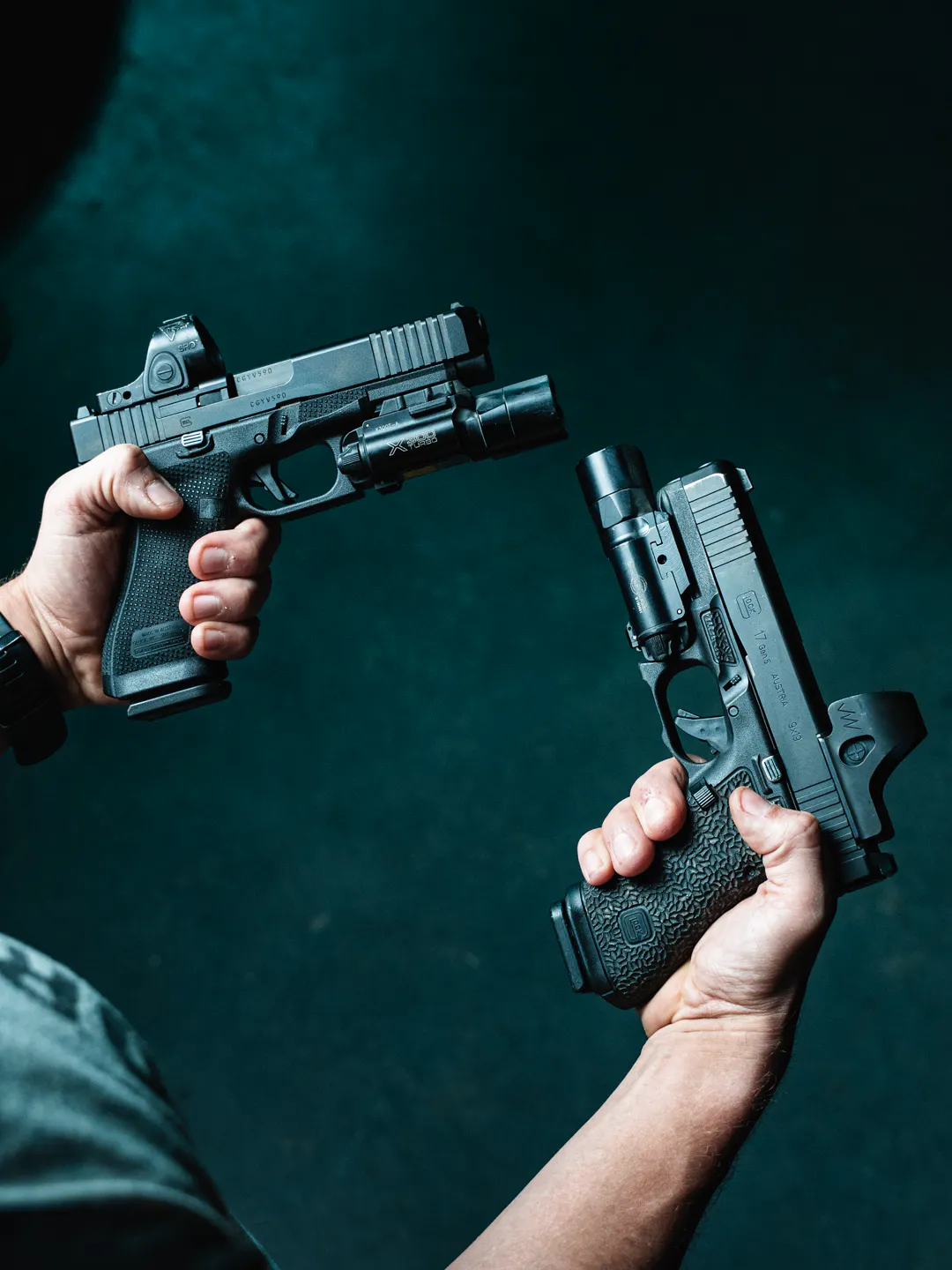
The more of your support hand — the non-dominant hand wrapping over your strong hand — you can get on the gun as well, the better you control it. This is often overlooked with very small handguns, and it's dictated by your hand size. As you hold the gun in your strong hand, look at how much gap there is between your palm and the tips of your three fingers. That's the area where you can roll in the palm of your support hand. The more support hand you can get in there, the better. This argues for a larger grip rather than smaller, provided you can conceal and carry it.
Some people with small hands or less grip strength may want to go with specifically designed models like the Smith & Wesson EZ series. That said, the vast majority of people, with a bit of technique, can learn to confidently operate any of the popular handgun models.
Try Before You Buy
Your best approach is to try some popular models at a local gun range that does rentals. It's one thing to feel a gun in your hand at the counter. Shooting it is a different level of feedback. Some guns feel good in the hand but are less comfortable and controllable once you're experiencing recoil.
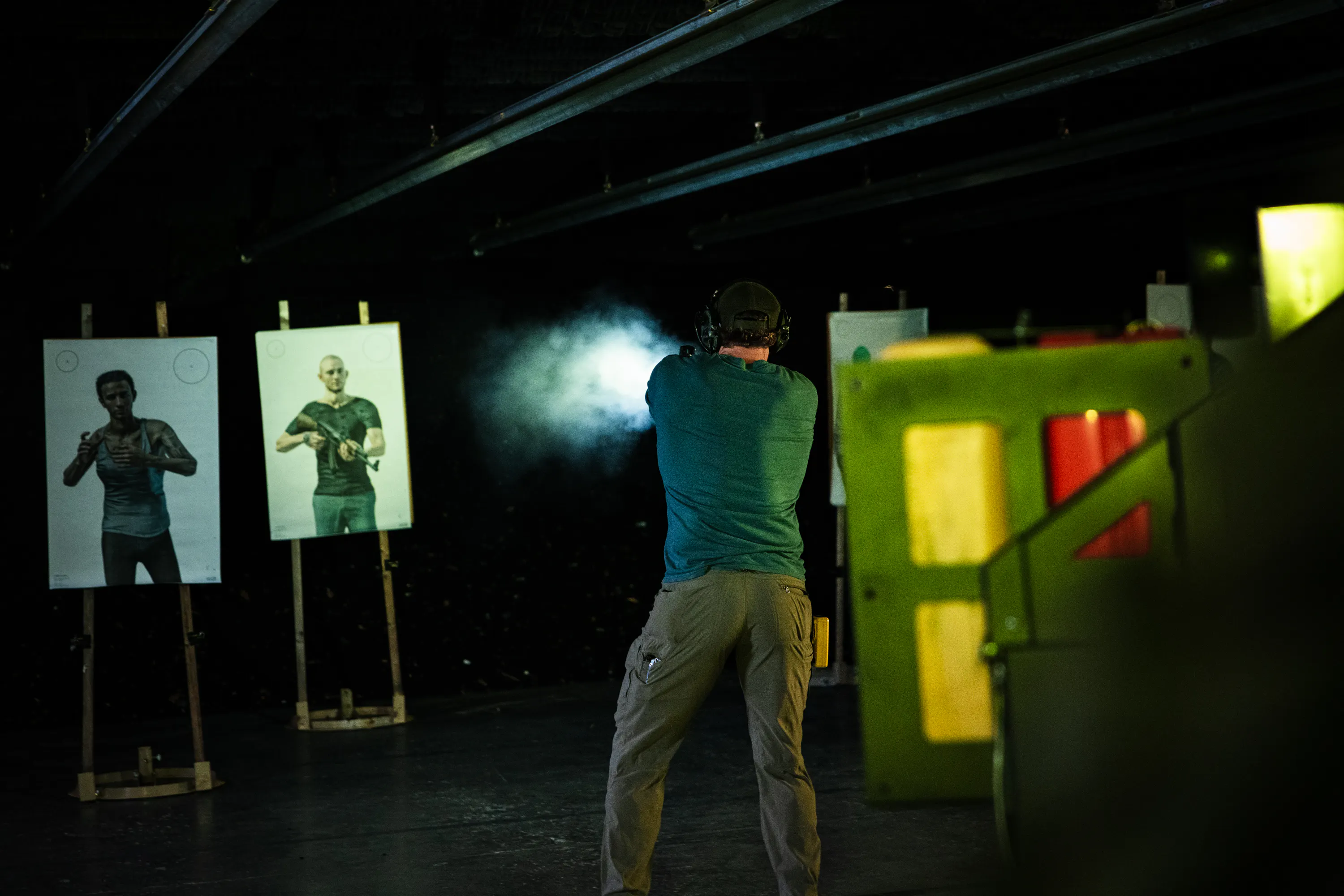
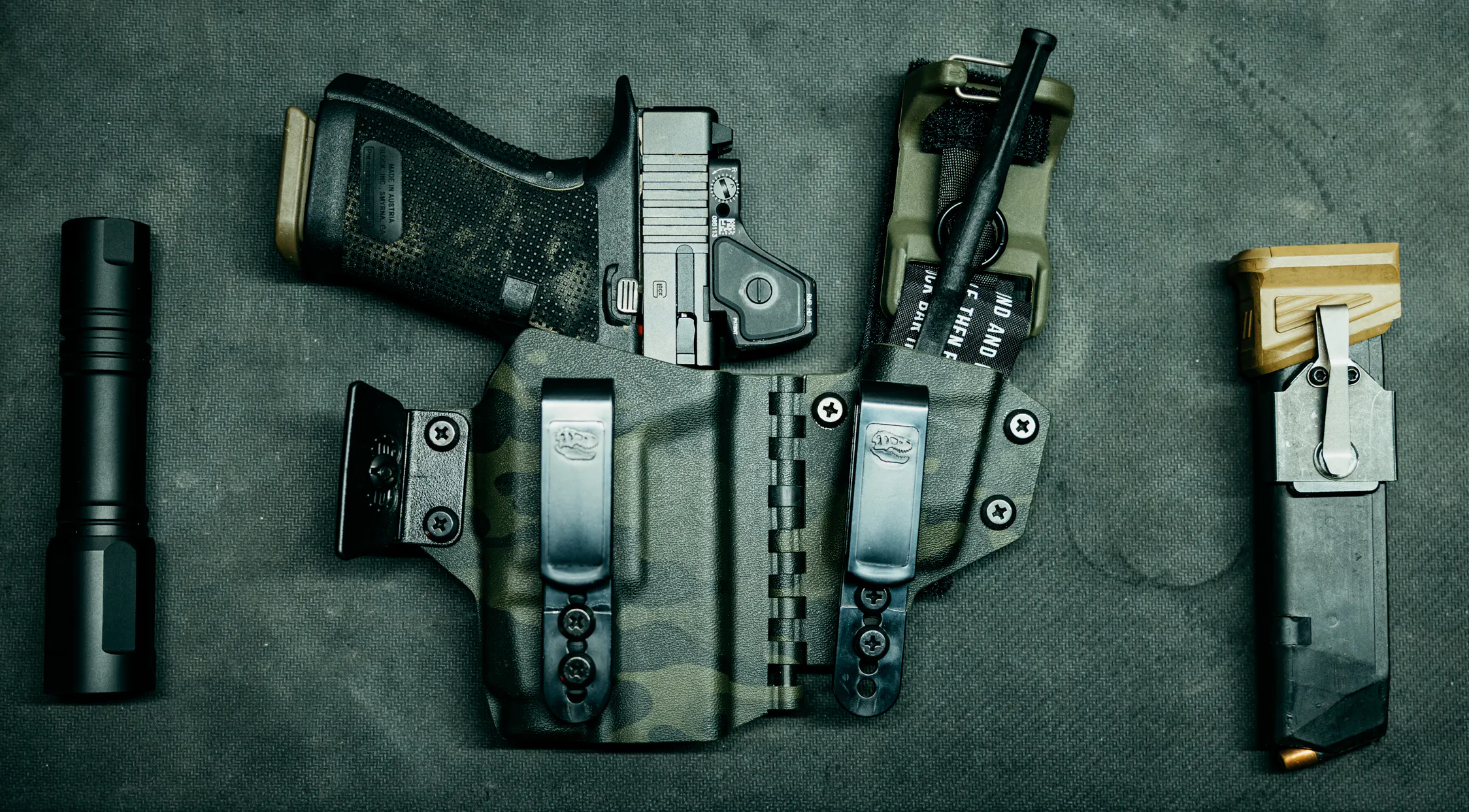
T.REX customers are discerning and take carry and training seriously, so it's worth noting what the most popular models among T.REX holster customers are: Glock 19, Sig P365 (especially larger variants like XMacro), Smith & Wesson M&P series, and Glock 43X. All are 9mm. If you absolutely can't get to a range, those models are popular for a reason and will serve most users well.
No Manual Safety
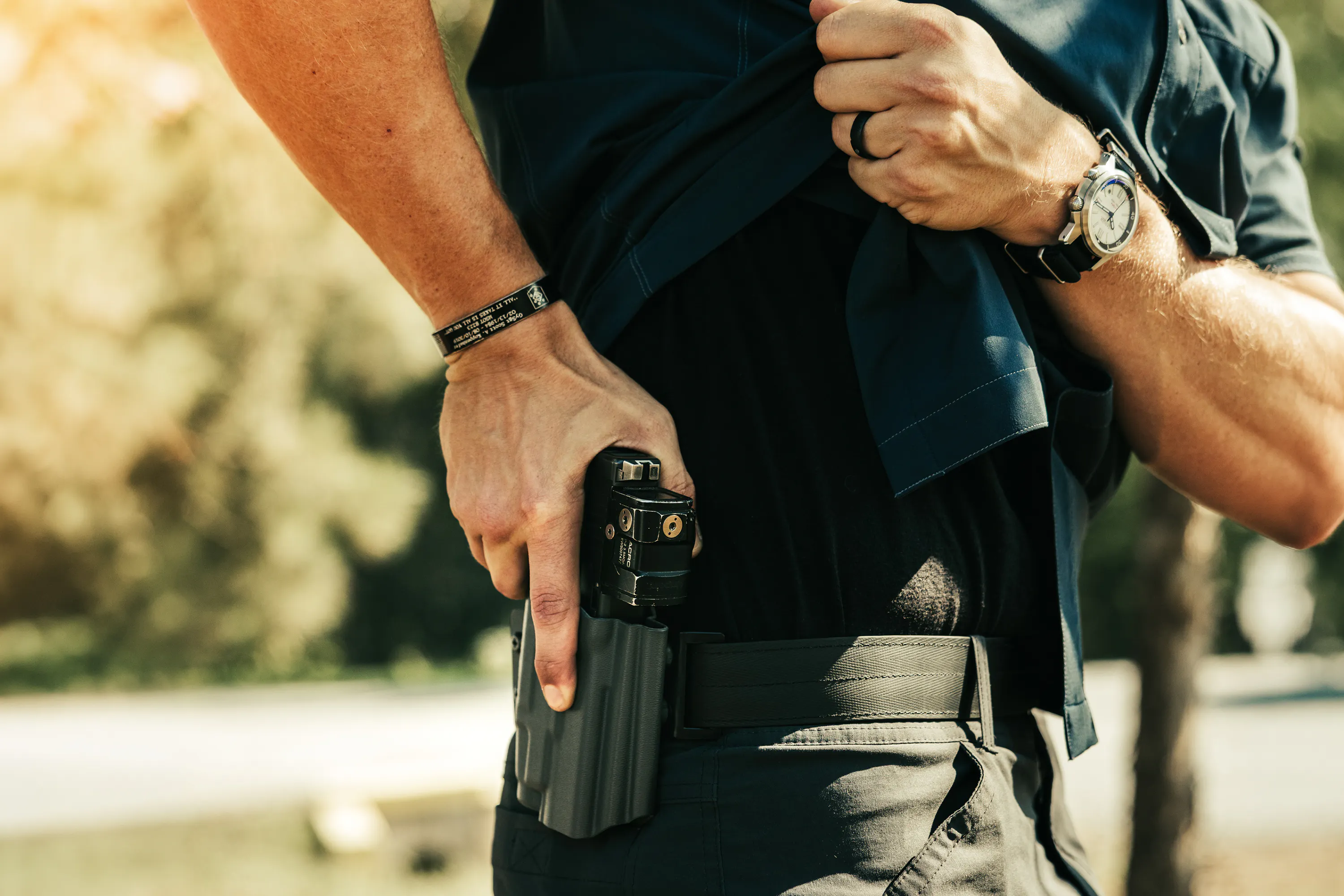
We recommend no manual safety. Modern pistols have several internal safeties that are disengaged automatically as you press the trigger. Your external safety is a Kydex shell holster that completely covers the trigger guard. And after you draw, your safety is the discipline to follow the rules of firearm safety, specifically: Keep your finger off the trigger until your sights are on target and you have made the decision to fire. A manual safety on a carry handgun is an additional unnecessary step to train, or risk fumbling at the worst possible time.
Trigger
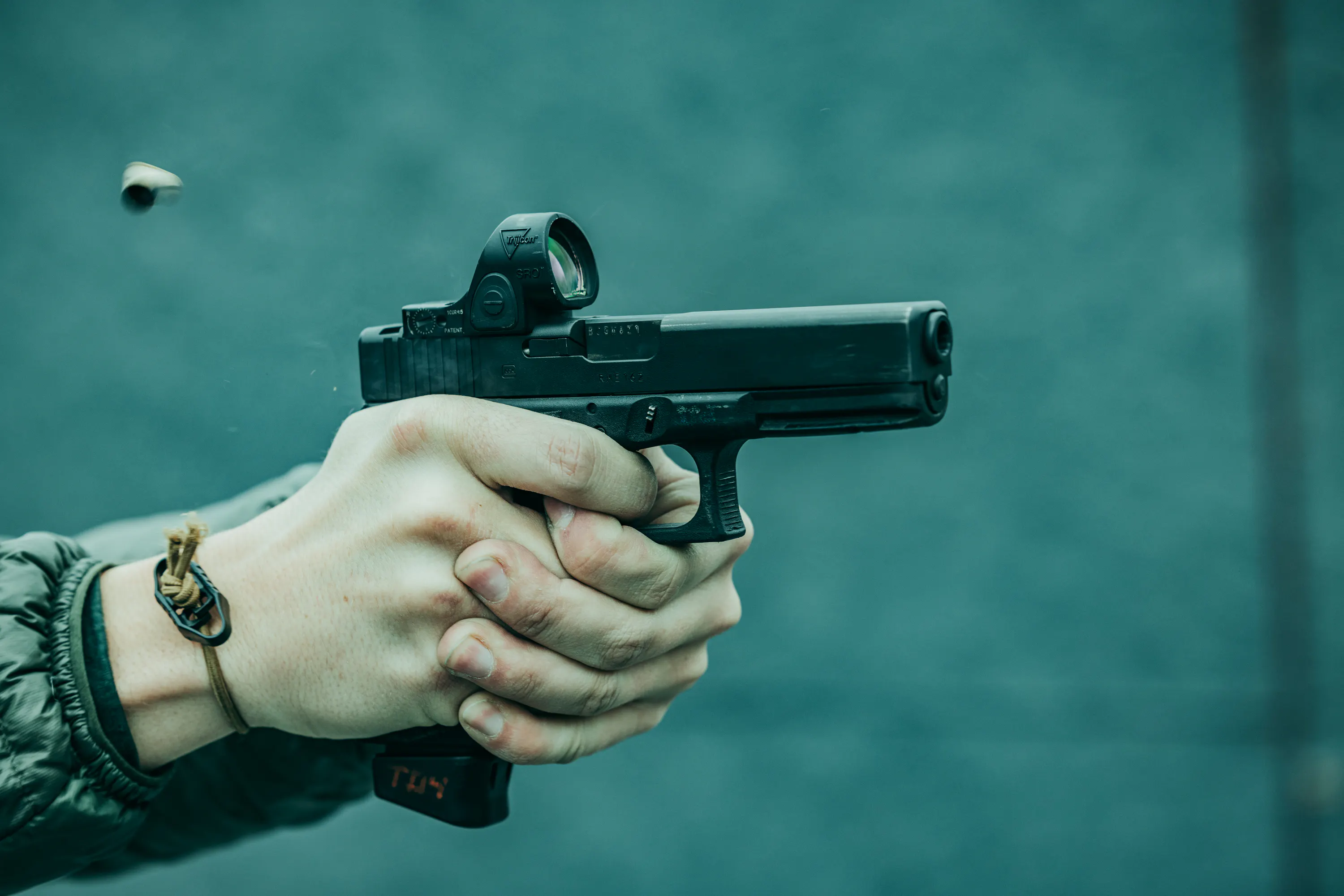
Triggers vary from gun to gun. A heavy or gritty trigger is more difficult to press without pulling the sight off target, compromising the shot placement goal. When you are evaluating handguns, pay attention to how the trigger feels — the weight of the press, whether it breaks cleanly, and whether the reset is tactile and unmistakable (to find the reset: press trigger, keep it pressed, rack slide, and then release trigger—the click on that release is the "reset").
A good trigger does not mean a very light trigger. A smooth, predictable trigger at a reasonable weight is what you want. Stock triggers tend to be pretty good these days, unlike 10 years ago.
Magazine Capacity

Capacity matters, but it is not the most important factor. Among our popular models, the Glock 19 and 43X hold 15 rounds, and the P365 variants run from 10 up to 17. More rounds is better, all else being equal, but capacity comes with size, and a gun you carry beats a gun you leave at home because it prints under your shirt. Decide on size and concealment first, and carry a spare mag to increase your capacity.
Red Dot Optics
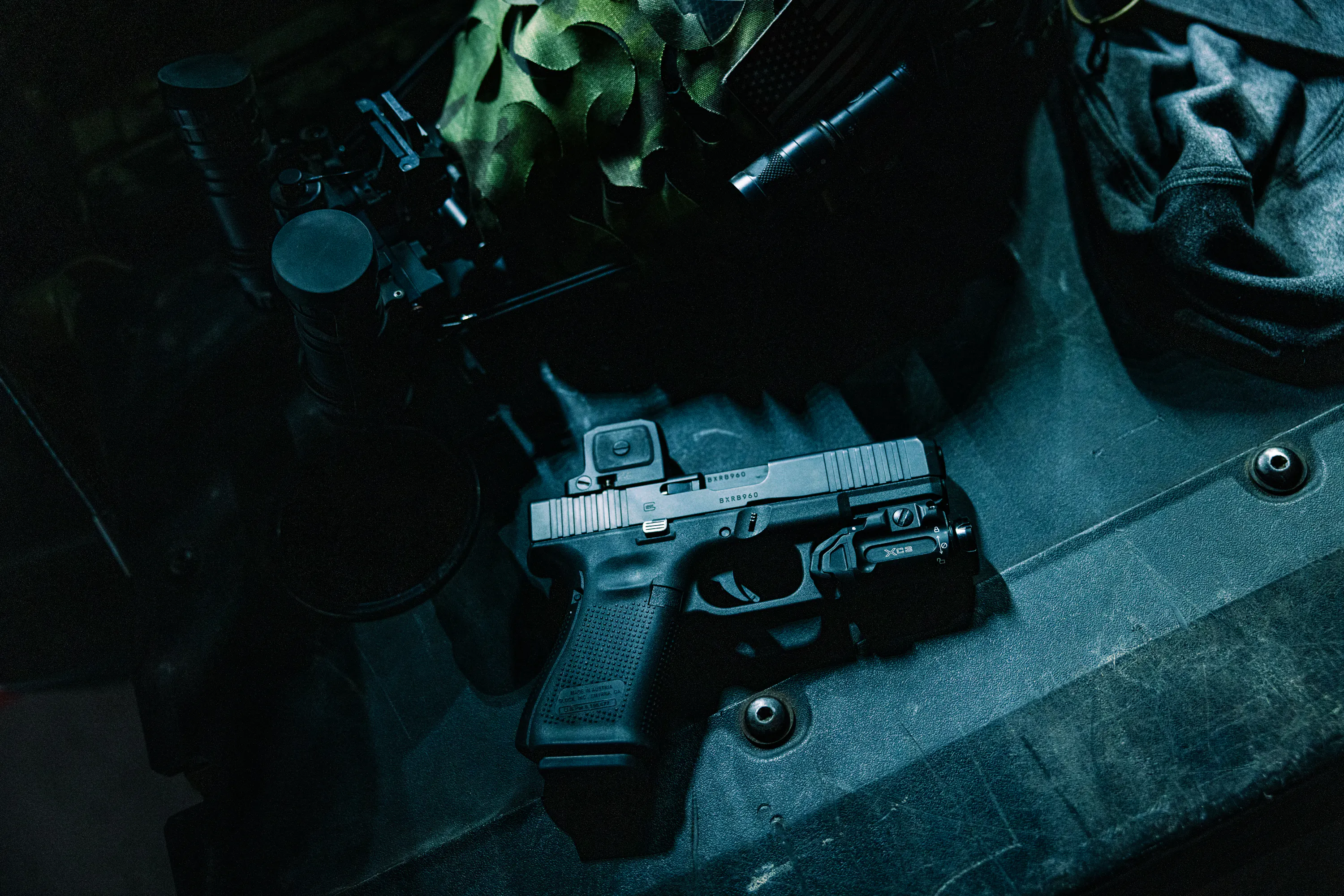
Red dot optics should be standard on defensive handguns. They enable faster, better shot placement, because you can keep a hard focus on the target, and the red dot appears superimposed on it, giving you an eye-catching point of aim that works at any distance. They're especially good for shooting beyond 10 yards.
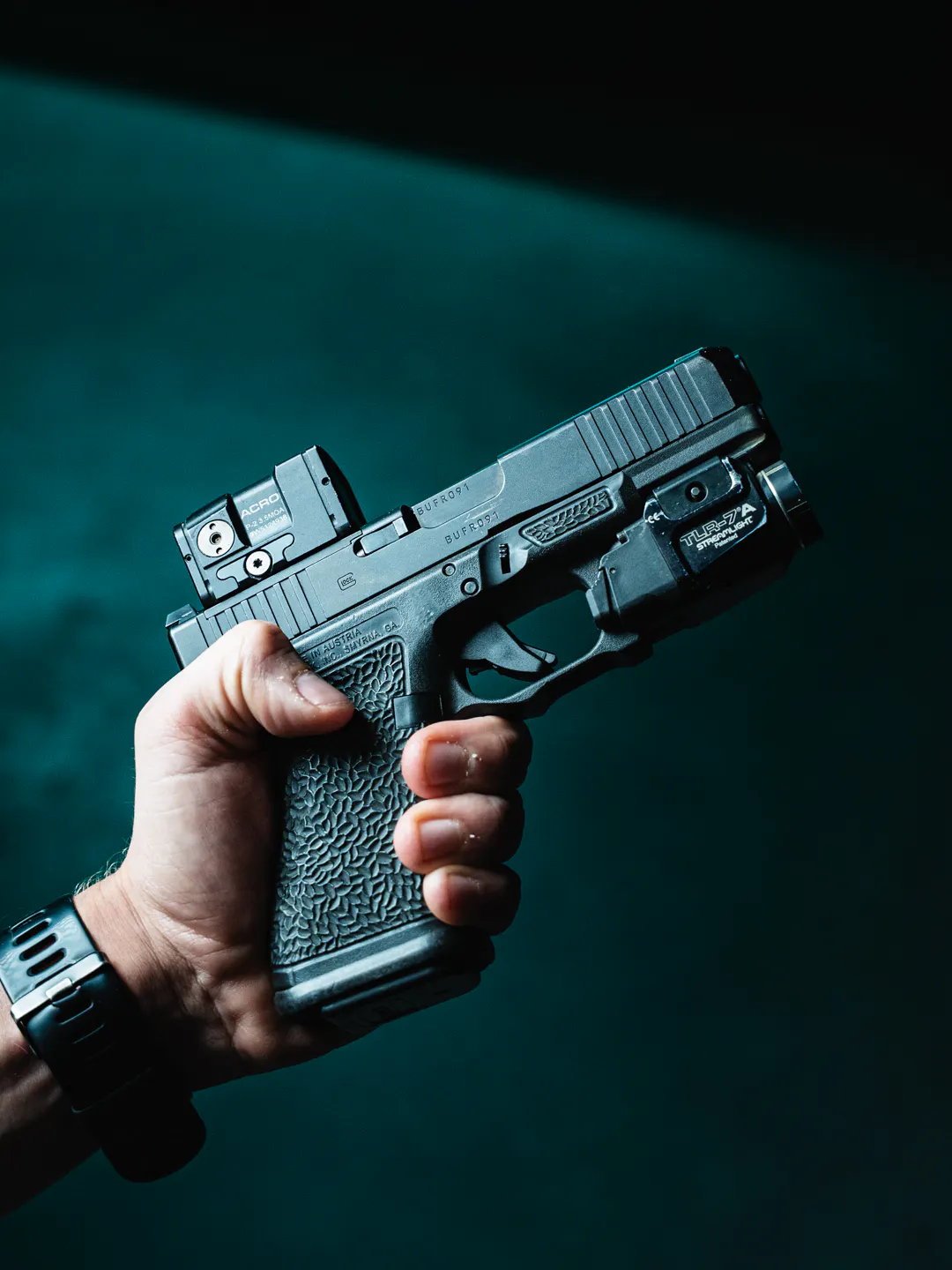
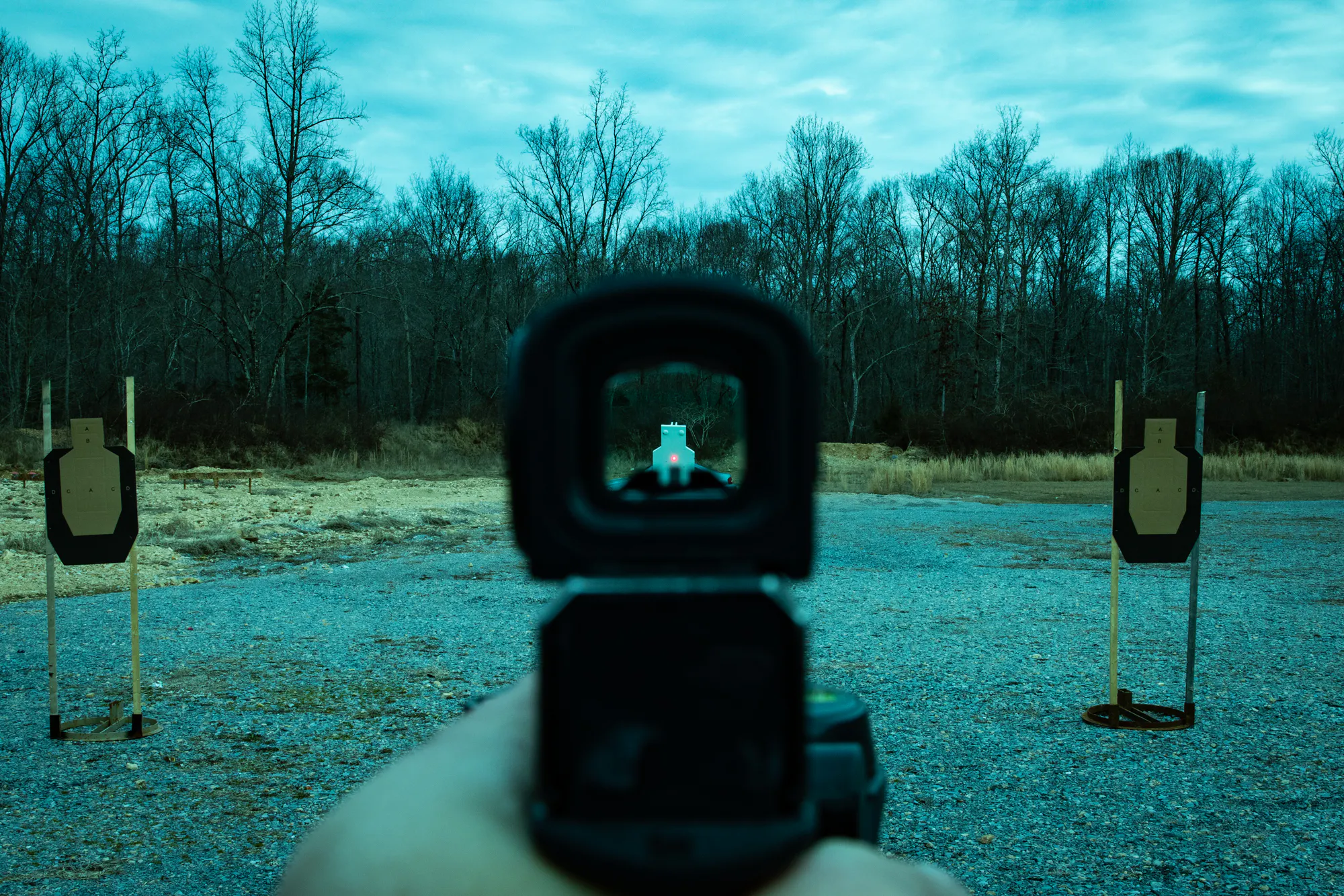
Some people talk about the "average" gunfight being three rounds at three feet. But averages mislead. The average does not capture the range of situations you might find yourself in. If you carry a gun, you're preparing for an unlikely but potentially deadly scenario. Elisjsha Dicken and many other innocent bystanders are glad he put in the effort to be proficient at 40 yards (look him up, if you don't know). Being able to take a precise shot further out has many useful applications. And the confidence that comes from that competence is worth the effort.
Red dots also enable better dry fire practice: draw, present, and trigger press without live ammunition. Dry fire is the secret to leveling up your skill, and a red dot gives you the feedback you need to adjust and improve.
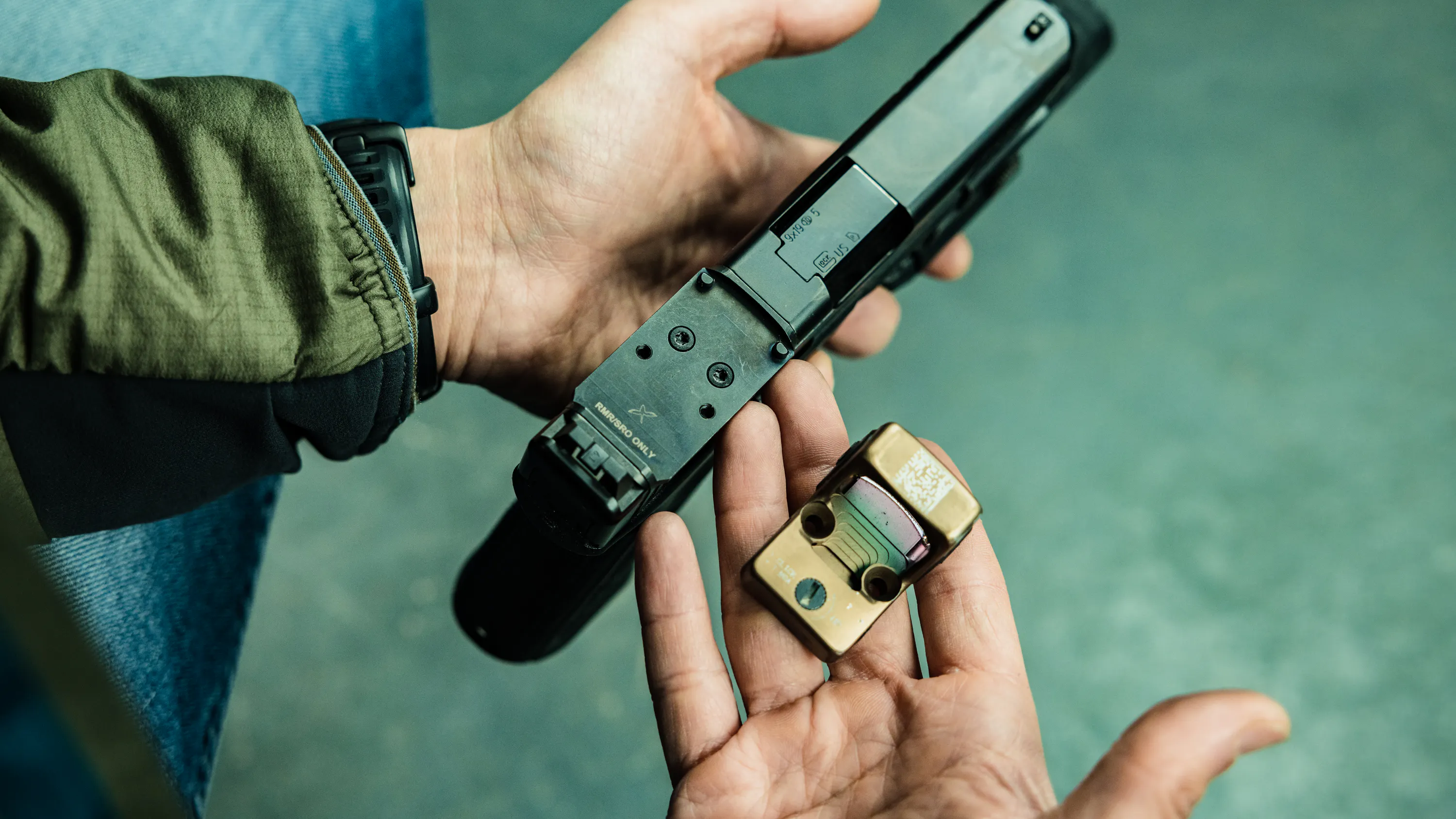
Many gun models come out of the box with a red dot mounted. This is a good option. Optic-to-slide mounting patterns vary and there is no true industry standard yet, so for many people, buying with the red dot pre-installed is the simplest option. The downside is: firearms carry a federal excise tax. If the red dot ships attached to the handgun, that tax applies to the optic too, so you'll pay more on the optic than you would buying it separately. Here at T.REX we provide a curated selection of red dots we trust with our lives, along with the guidance to show what will fit your gun.
Weapon Lights
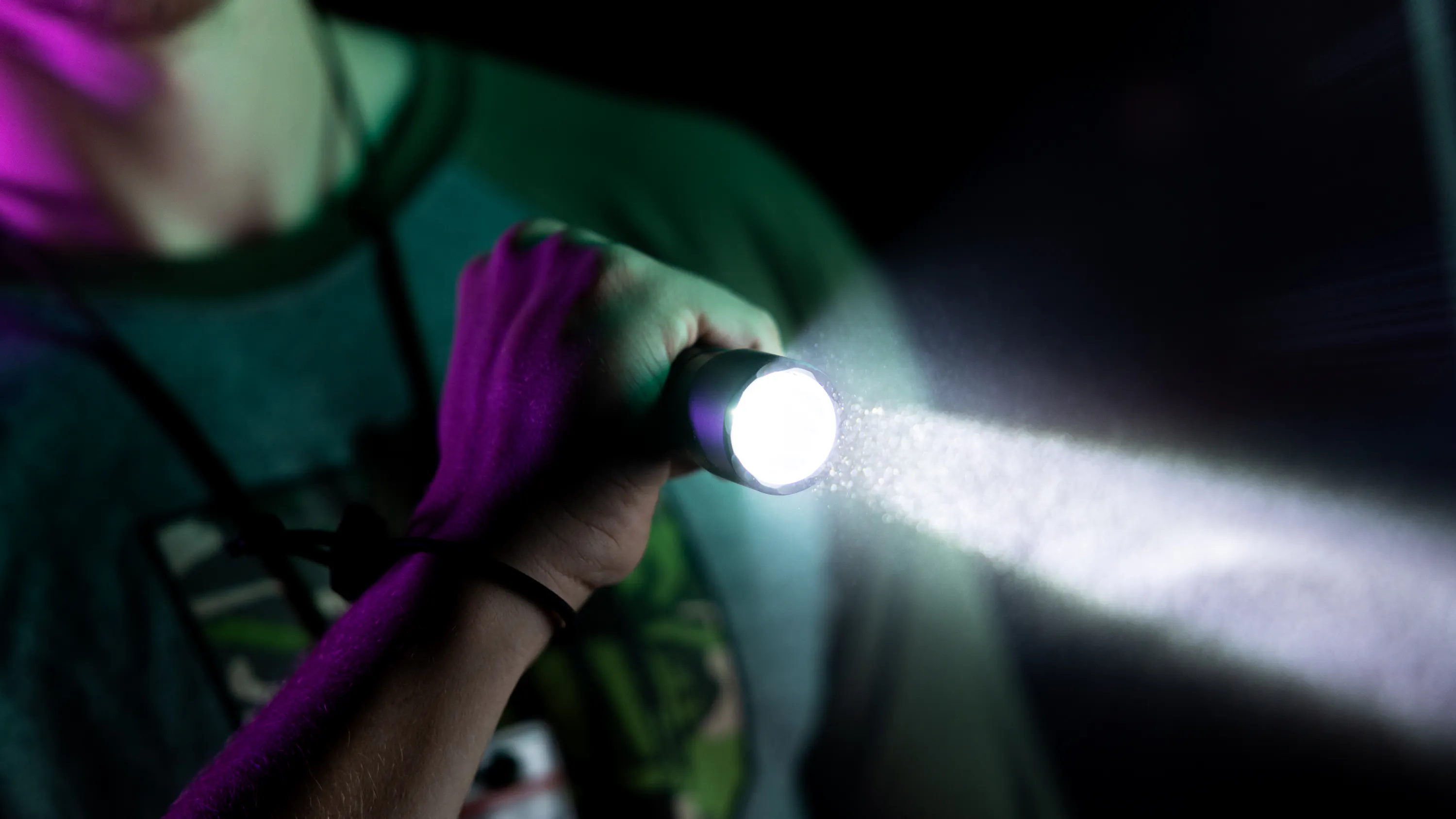
Two-thirds of violent incidents happen in a dark or low-light environment. A weapon light is a prudent addition to a defensive pistol. It is not a replacement for a good handheld EDC flashlight, though. They also reduce recoil by adding weight toward the muzzle.
How Much Should I Expect to Spend?
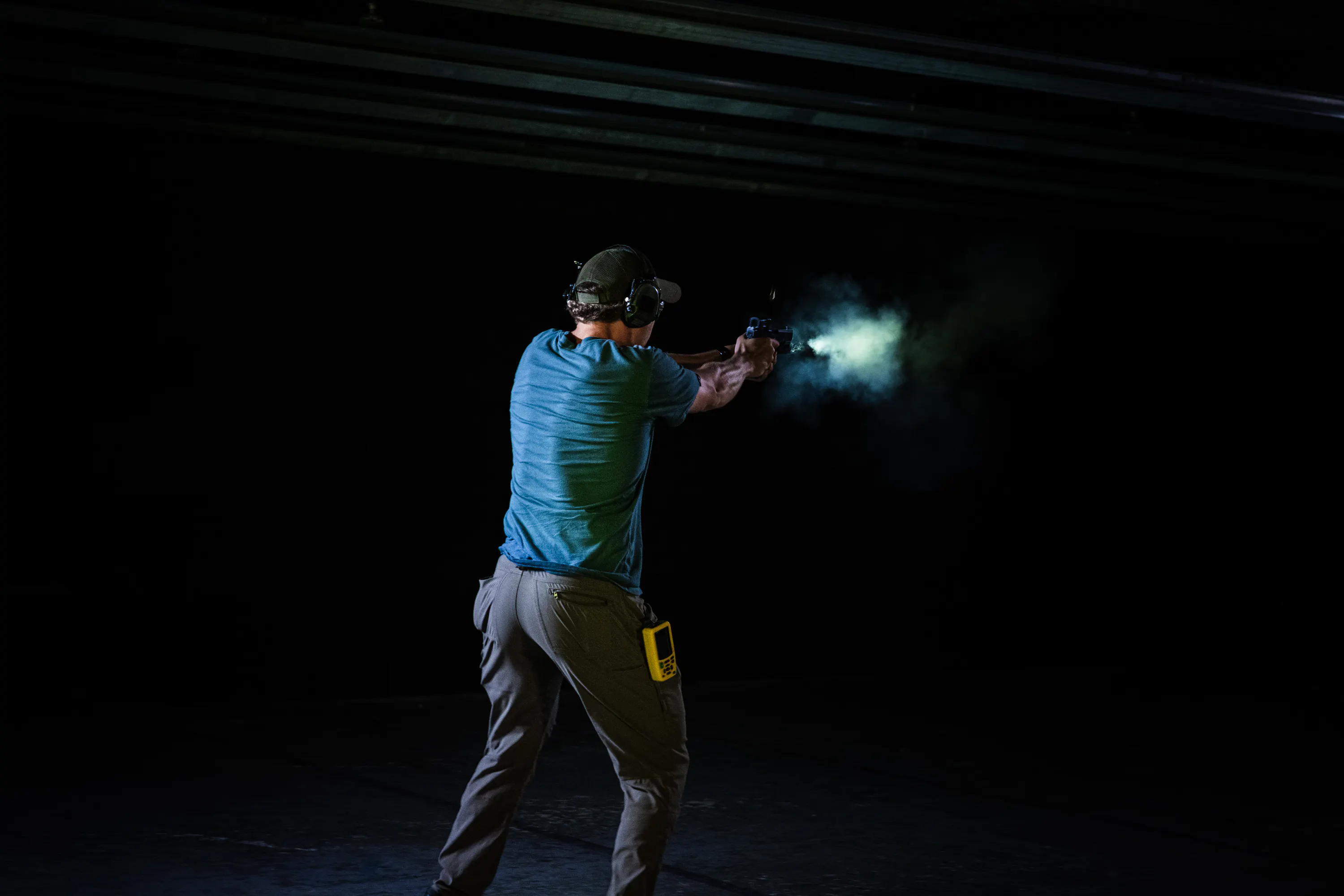
The choice to be ready to protect life isn't cheap. A quality defensive pistol from a reputable manufacturer with red dot mounted starts around $900 new.
Used guns can be good value if you know what to look for. I carry a Glock that I bought used just a few years into my concealed carry journey, and it's run flawlessly through many thousands of rounds. But older guns often do not come ready to install a red dot.
If you're new to all this and don't have someone to help you evaluate a used gun, buying new is the way. This is an investment that can last you a lifetime.
No Revolvers?
Here at T.REX, we build holsters only for semiautomatic pistols. Most revolvers do not allow a red dot or a weapon light to be mounted, so there go the two biggest practical upgrades available for modern defensive handguns. Ammo capacity is limited to 5-6 rounds and reloads are slow. Recoil tends to be sharper. Revolvers aren't our recommendation for anyone.
A common myth is that revolvers are more reliable than pistols. Modern manufacturing has solved early reliability problems with pistols, and today they are no more likely than a revolver to malfunction. No major military in the world issues revolvers anymore. As a friend once put it, "First there were revolvers. Then came semi-autos. That's called progress."
Test Before You Trust
Before you carry any handgun for defense, you'll want to test it for reliability with the specific ammunition you intend to carry. Quality modern pistols are extremely reliable, but there are occasional quirks with individual gun and ammo combinations. You want to surface any issues at the range, not in a life-or-death situation.
Conclusion
Like any topic, you can go as deep as you want on choosing a gun for everyday carry.2 Hopefully this overview of how we choose our carry handguns gives you the informed confidence to make your own choice.
Ultimately, you are the weapon. Only you can choose to be ready to protect what matters most. There's no replacement for training. But the right carry gun will multiply your growth curve as you level up your competence. Now, go get the biggest 9mm pistol you will carry every day.
- Minus minor losses in the mechanism and from drag as the bullet moves through the air. ↩
- We haven't talked about bag guns or PDWs, which have their places (and are too much fun!). And there are even accomplished instructors who make revolvers work and prefer them for deep concealment because of the different profile (if you're curious, look up Rhett Neumayer). ↩