
T.REX Titan Holster Environmental Testing Results
Testing Overview
We wanted to know: What can the Titan withstand?
Our in-house environmental testing put the Titan through combinations of extreme cold and heat, particulate, and radiation conditions.
Below you can read a summary of the exposures the Titan was subjected to, each with their controlled parameters and the observed results.
For the complete methodology and observed results, see the full testing document:
This testing was performed in-house to observe the Titan Holster's durability and was not performed on equipment that has been scientifically certified and calibrated. It is not equivalent to, and should not be interpreted as, certified or accredited laboratory testing.
Executive Summary
The Titan Holster remained functional at the end of every test.
Throughout each of the following tests, we wanted to test 2 things (where applicable):
- Does the holster still function?
- Was the ultimate load (the force required to overcome the retention mechanism) affected?
In the Water Immersion and Particulate tests we did not document ultimate load test results, as those tests were not designed to test the strength of the materials used to make the holster. Those were strictly function tests.
Heat – Dry
Thermal / High Temperature
- Temperature
- ≈140 °F
- Relative Humidity
- 10 - 13% RH
- Conditioning Method
- Full Conditioning, 7 Days
- Test Method(s)
- Simple Function Test, Ultimate Load Test
- Result(s)
- Function: Full Function
Ultimate Load: 458 - 560 lbf, avg 515 lbf
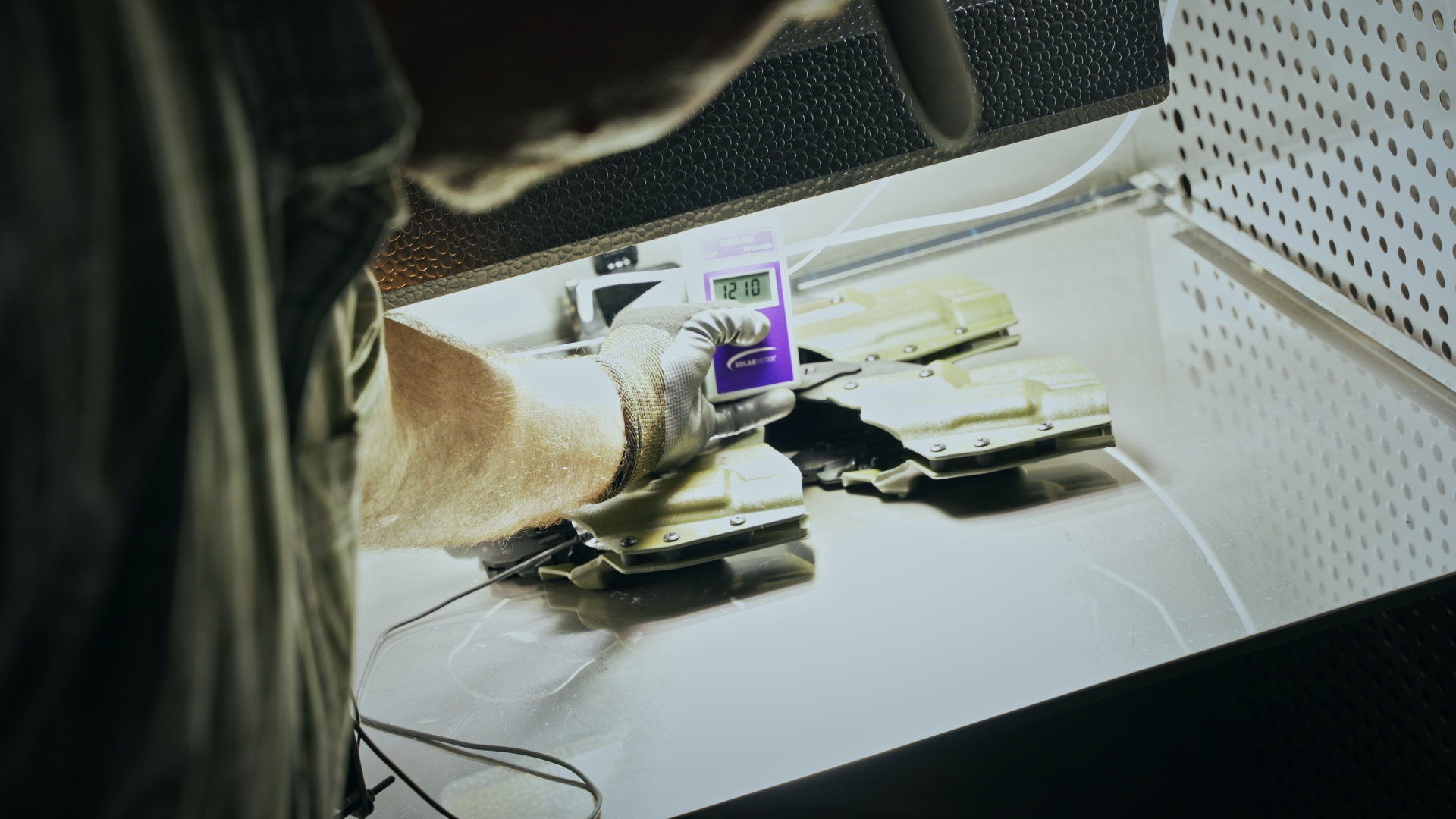
Result
The Titan was subjected to 140°F for 7 days to verify the integrity of the polymers. Full function of the holster remained and there was minimal to no reduction in maximum load on the tested holsters.
Heat – Humid
Thermal / High Temperature + Humidity
- Temperature
- ≈140 °F
- Relative Humidity
- 92 - 96% RH
- Conditioning Method
- Full Conditioning, 7 Days
- Test Method(s)
- Simple Function Test, Ultimate Load Test
- Result(s)
- Function: Full Function
Ultimate Load: 206 - 344 lbf, avg 314 lbf
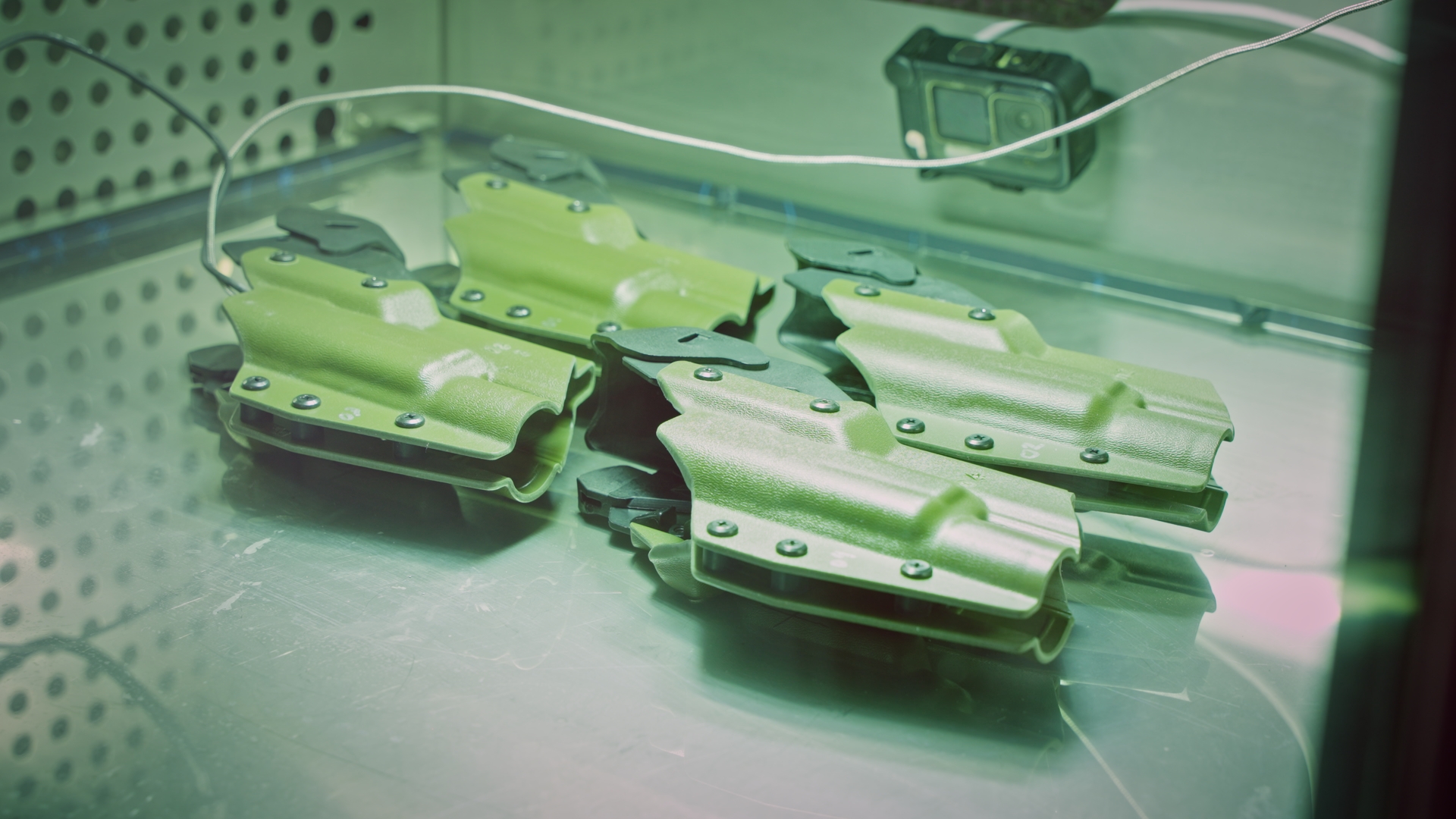
Result
The Titan was subjected to 140°F and high humidity (92-96% relative humidity) for 7 days to verify the integrity of the polymers. Full function of the holster remained, and there was a reduction of maximum load on the tested holsters. Maximum load performance remained well above the threshold.
Extreme Cold
Thermal / Low Temperature
- Temperature
- −60 °F
- Conditioning Method
- Full Conditioning, 7 Days
- Test Method(s)
- Simple Function Test, Ultimate Load Test
- Result(s)
- Function: Full Function
Ultimate Load: 314 - 468 lbf, avg 410 lbf
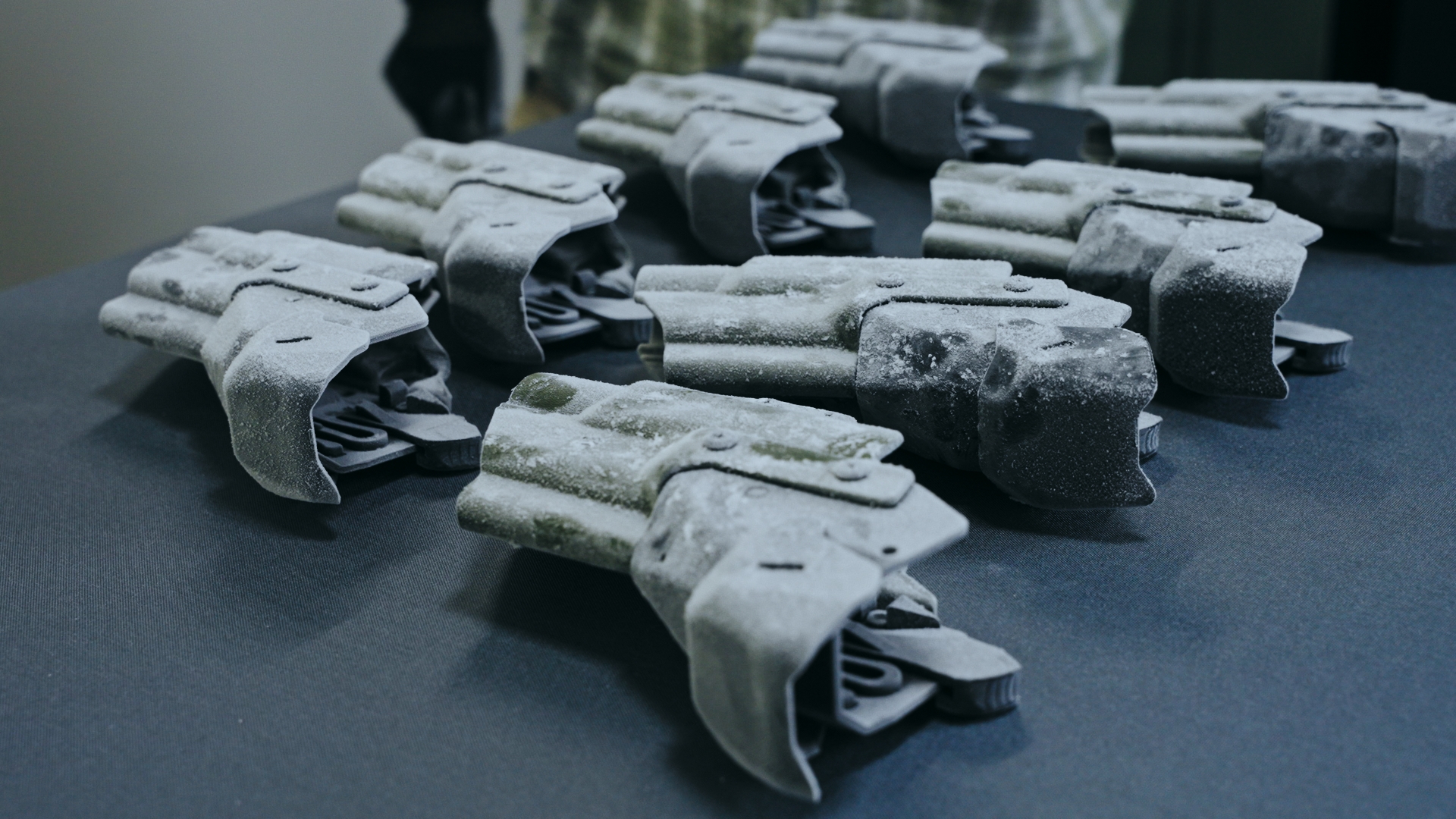
Result
When submitted to extremely low temperatures (-60°F) for 7 days, we did not notice any degradation in the function or load strength of the holster.
Combined Sequential — Cold / Hot
Thermal Extremes
- Temperature
- ≈140 °F, -60°F
- Relative Humidity
- 10 - 13% RH (heat cycle)
- Conditioning Method
- Full Conditioning, 72 Hours Cold, 7 Days Heat
- Test Method(s)
- Simple Function Test, Ultimate Load Test
- Result(s)
- Function: Full Function
Ultimate Load: 444 - 590 lbf, avg 516 lbf
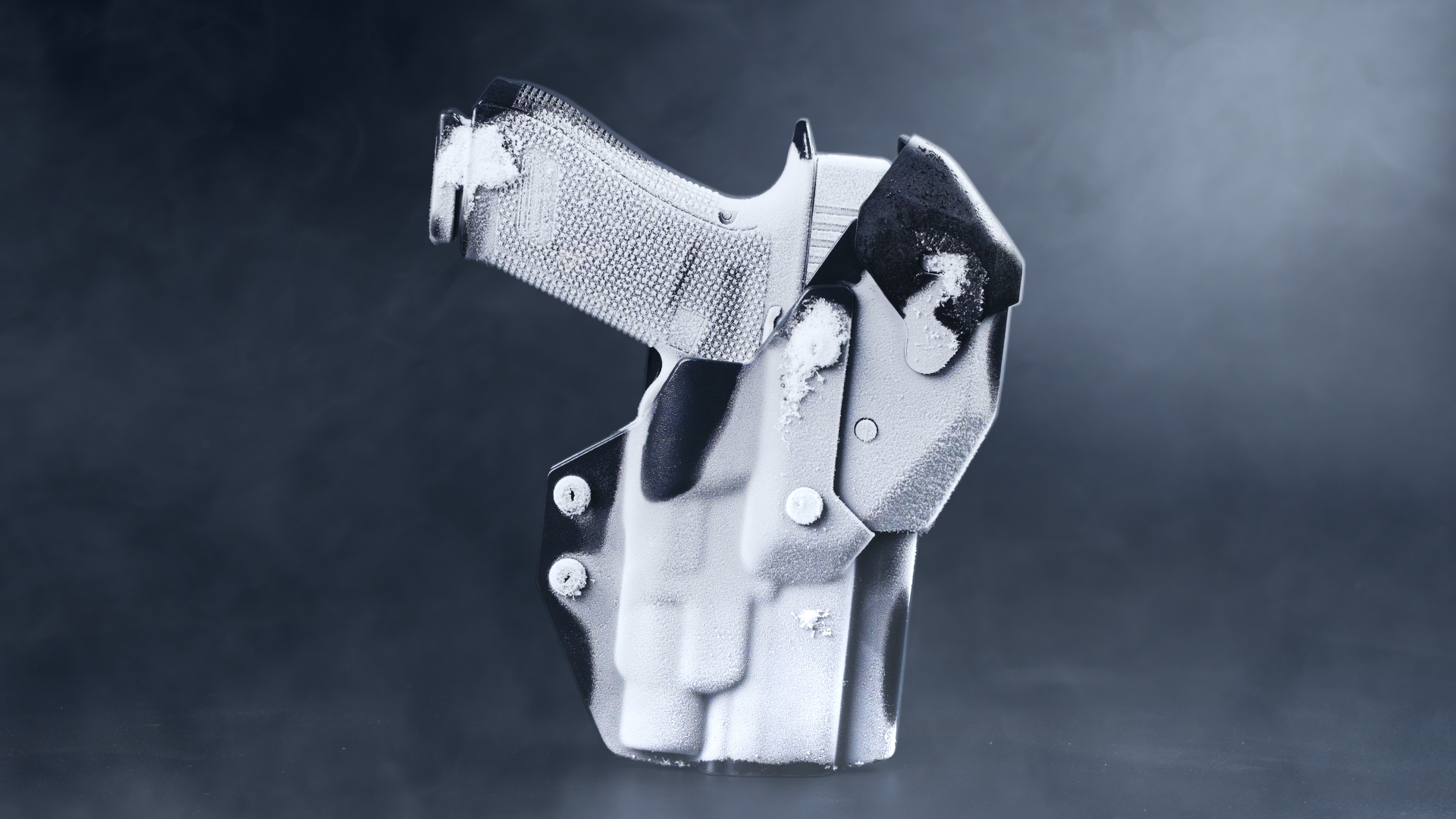
Result
In our combined Heat + Cold test ranging from -60°F to 140°F, there was no noticeable degradation in function or ultimate load performance of the holster.
Salt Fog
Corrosion
- Solution
- 5% NaCl
- Fallout Rate
- 0.6 – 2.0 mL/hr
- Conditioning Method
- 8 x 24-hour Cycles (24h wet, 24h dry)
- Test Method(s)
- Simple Function Test, Ultimate Load Test
- Result(s)
- Function: Partial Function, Full Function within 24 hrs
Ultimate Load: 154 - 334 lbf, avg 268 lbf
Result
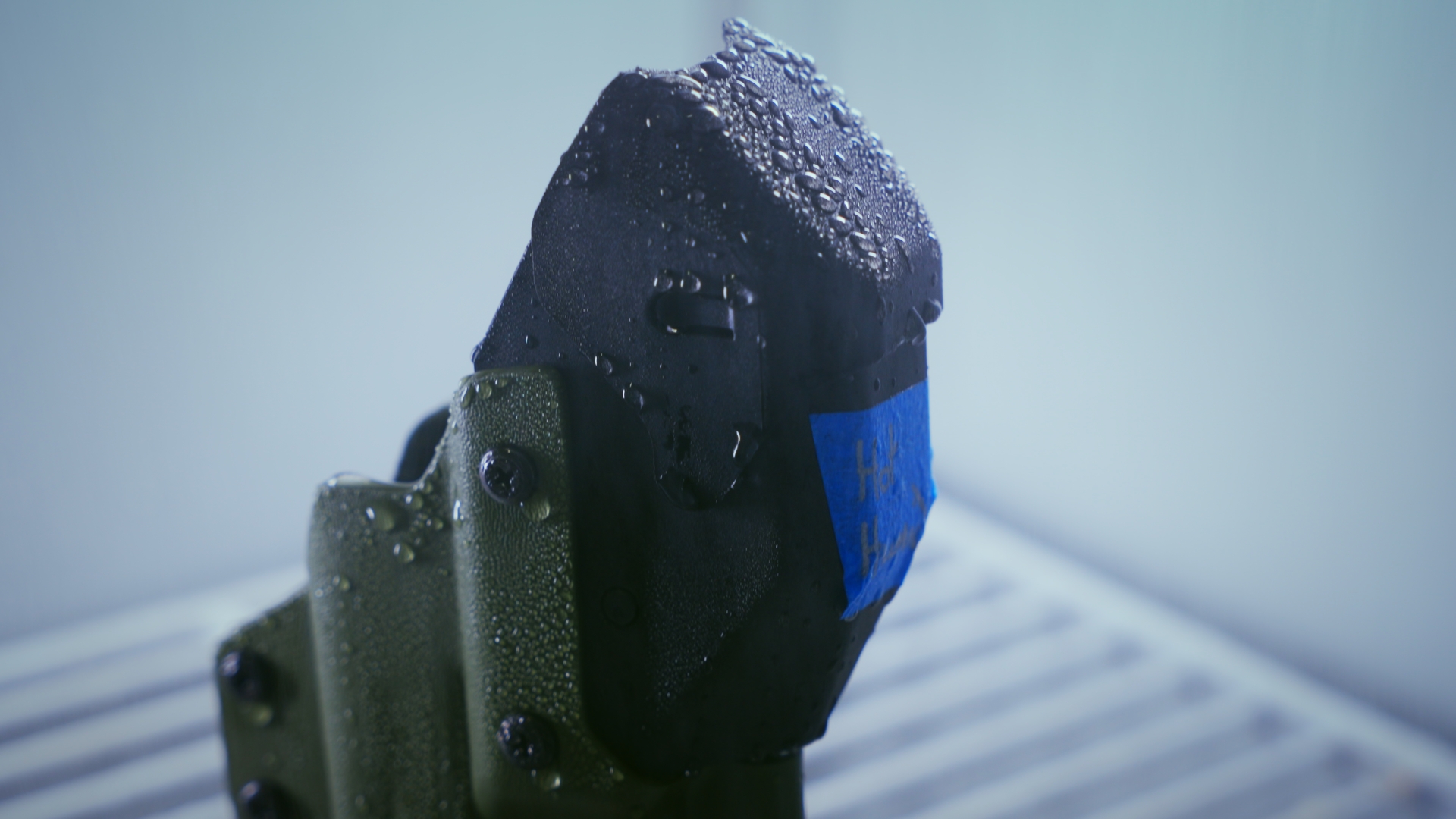
We submitted the Titan to salt fog testing more aggressive than the ASTM B117 method, with eight 24 hour wet/dry cycles. After three 24 hour cycles, we noticed some mechanism spring retardation. After all cycles, the spring retardation remained, there was some surface rust on the screws, and we noted that some of the ultimate load tests dipped.
Even with the slower return of the spring, the holsters were still functional. Once removed from the salt fog test environment and placed in standard room conditions (standard air conditioned room, not measured or controlled), within 24 hours nearly all the spring return came back, and the holsters continued to operate well. Ultimate load results were reduced, but results were still acceptable.
Dust Particulate
Particulate Ingress
- Particle Size
- ≈ 60 µm
- Conditioning Method
- Immersion
- Test Method(s)
- Simple Function Test
- Result(s)
- Function: Full Function
Result
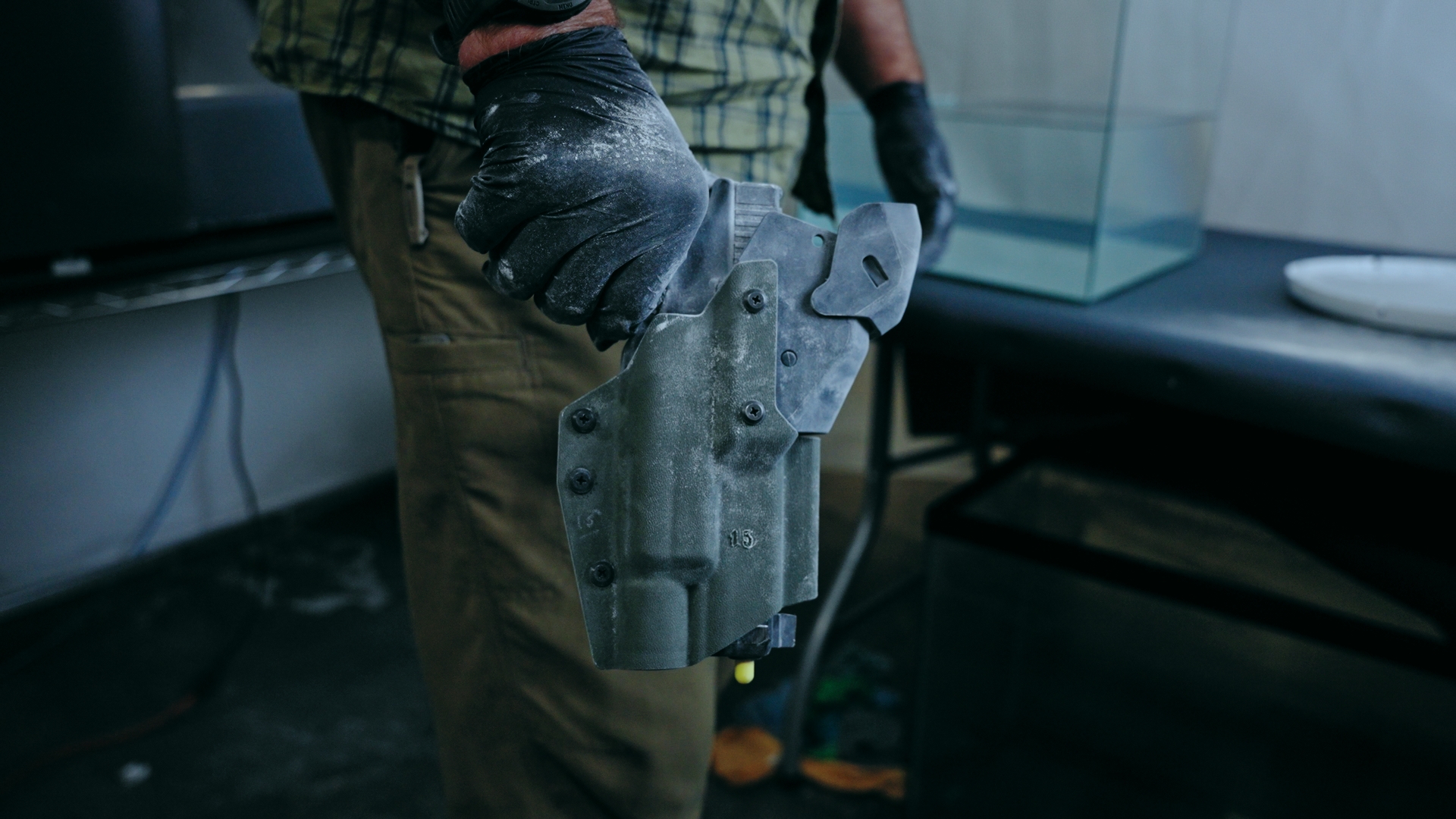
Fine airborne dust can cake and inhibit mechanism function. With the firearm inserted, we buried the Titan in ultra fine silica flour and drew it out. Function was completely unchanged.
Sand Particulate
Particulate Ingress
- Particle Size
- ≈ 210 - 849 µm
- Conditioning Method
- Immersion
- Test Method(s)
- Simple Function Test
- Result(s)
- Function: Full Function
Result
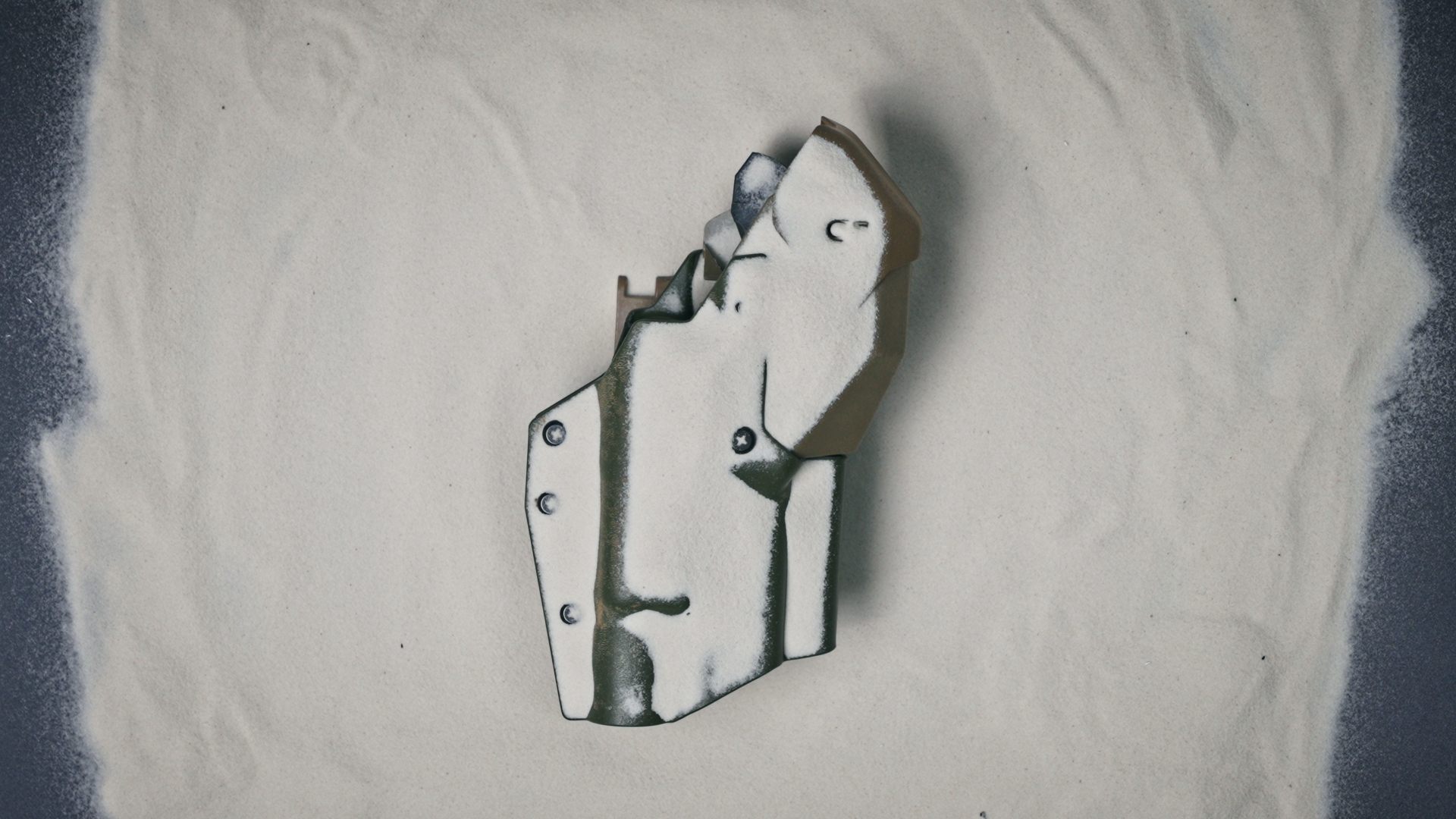
Fine sand can also become airborne and cake in a mechanism, causing obstruction. With the firearm inserted, we buried the Titan in quartz sand, and drew it out. The mechanism required only slightly more effort to operate, and the holster was still fully functional.
Freezing Rain
Icing
- Ice Accretion
- 1/8 in – 1/4 in
- Conditioning Method
- Intermittent Water Spray, Hard Freeze after Accretion Attained
- Test Method(s)
- Simple Function Test, Ultimate Load Test
- Result(s)
- Function: Full Function
Ultimate Load: 406 - 476 lbf, avg 446 lbf
Result
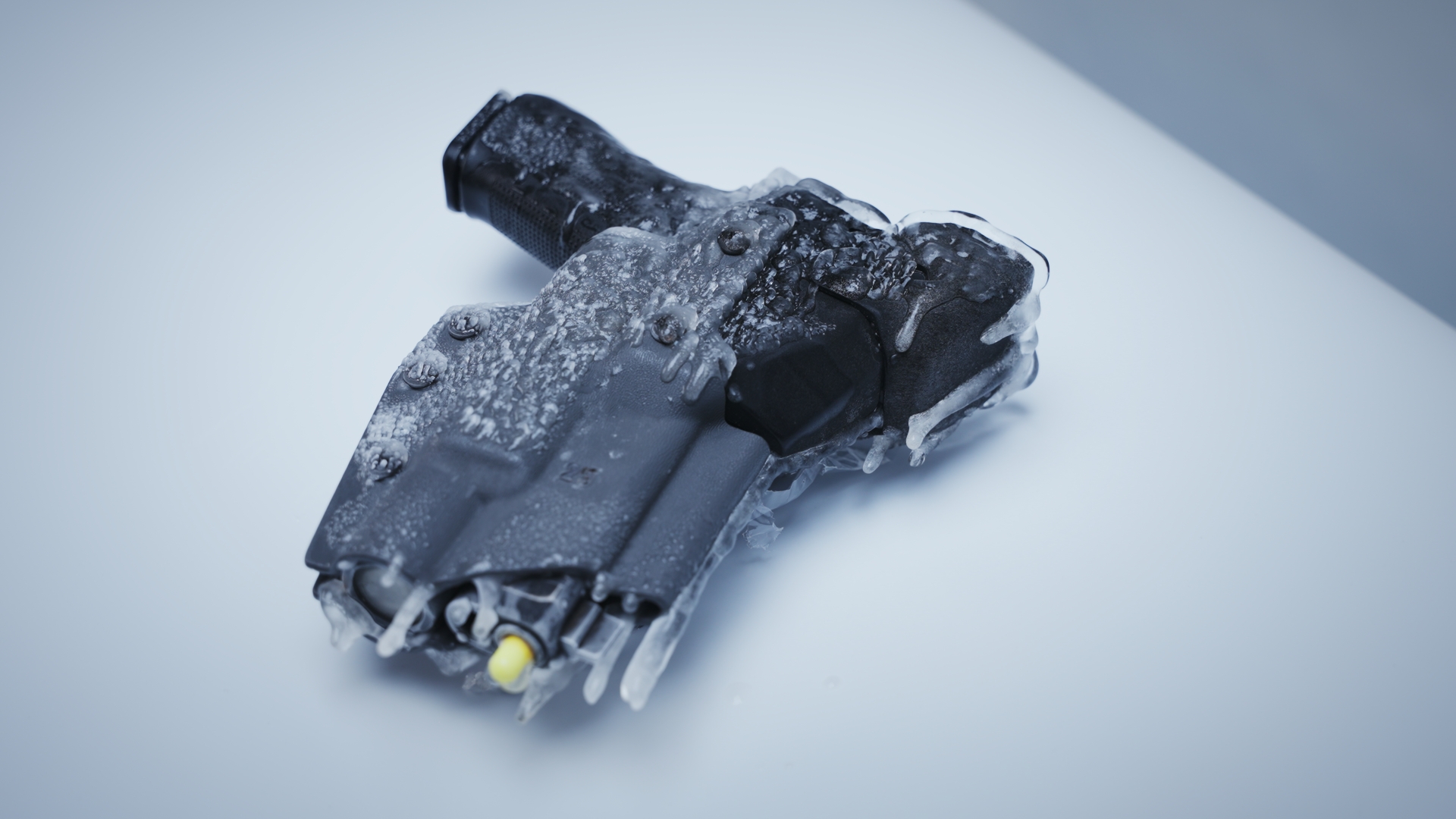
To simulate freezing rain, we built a setup to spray water onto the holster in a freezer until we had filled and covered the holster in ice. After letting the ice freeze hard we performed the function test. Without initially removing any ice buildup, the retention mechanism was still able to release. However, the ice buildup around the weapon did lock it into the holster. Simply striking the holster broke the ice buildup and freed the gun.
The holster showed no degradation in function or ultimate load tests. The weapon itself, however, was not able to function until the internals had completely thawed out.
Ultraviolet Radiation
Radiant Exposure
- UV Irradiance
- 41 - 78 mW/cm²
- Conditioning Method
- 5 x 24-Hour Cycles (20h light / 4 hr dark)
- Test Method(s)
- Simple Function Test, Ultimate Load Test
- Result(s)
- Function: Full Function
Ultimate Load: 418 - 508 lbf, avg 472 lbf
Result
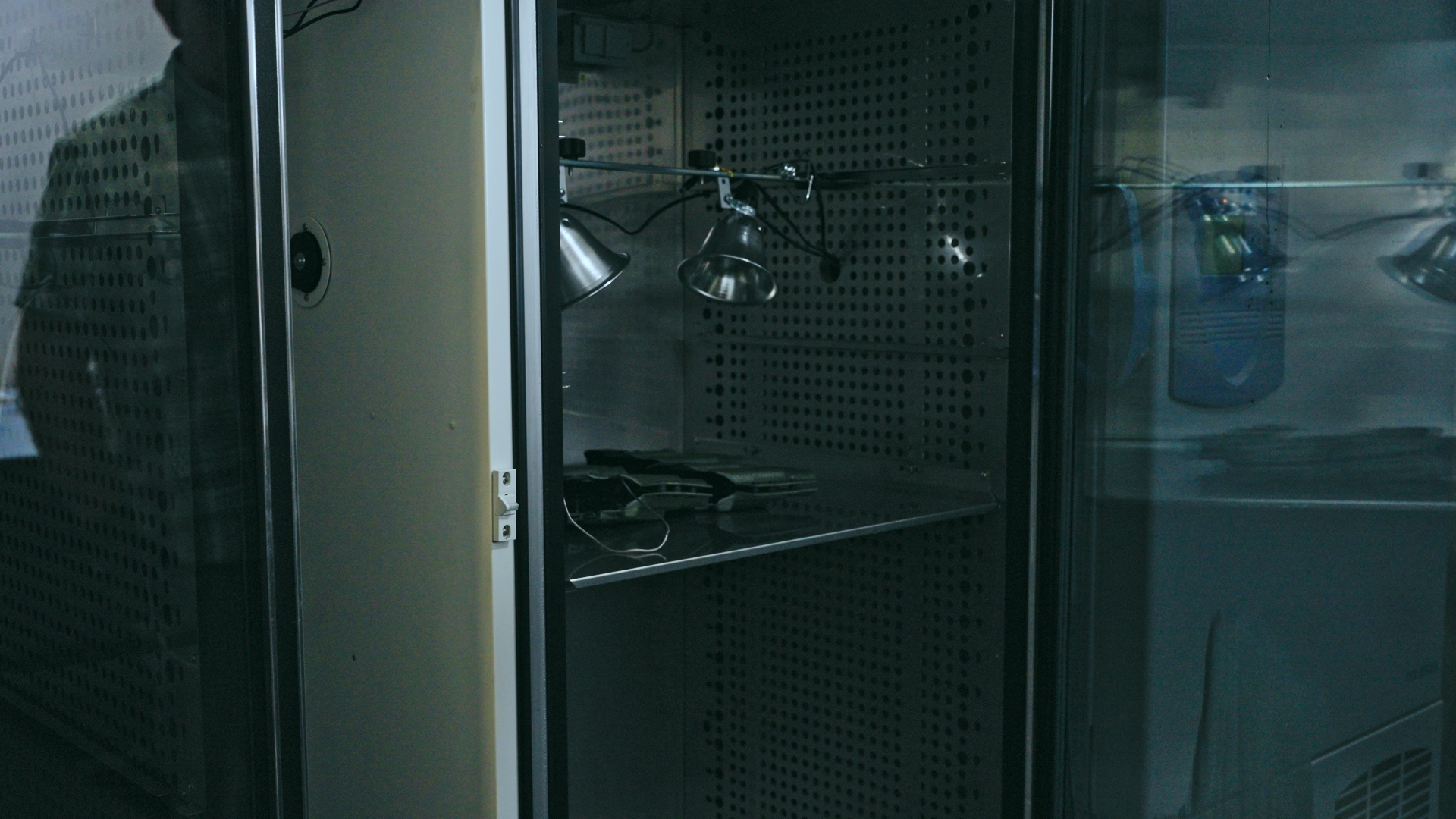
Ultraviolet light is known to degrade plastics quickly. In this test we subjected the holster to several times the amount of UV radiation of direct sunlight across five 24 hour cycles (20 hrs of UV, 4 hrs of darkness). There was no degradation of function or ultimate load performance.
Solar Radiation
Radiant Exposure
- Irradiance
- 1211 - 1244 W/m², Full Spectrum
- Conditioning Method
- 5 x 24-Hour Cycles (20h light / 4 hr dark)
- Test Method(s)
- Simple Function Test, Ultimate Load Test
- Result(s)
- Function: Full Function
Ultimate Load: 244 - 382 lbf, avg 284 lbf
Result
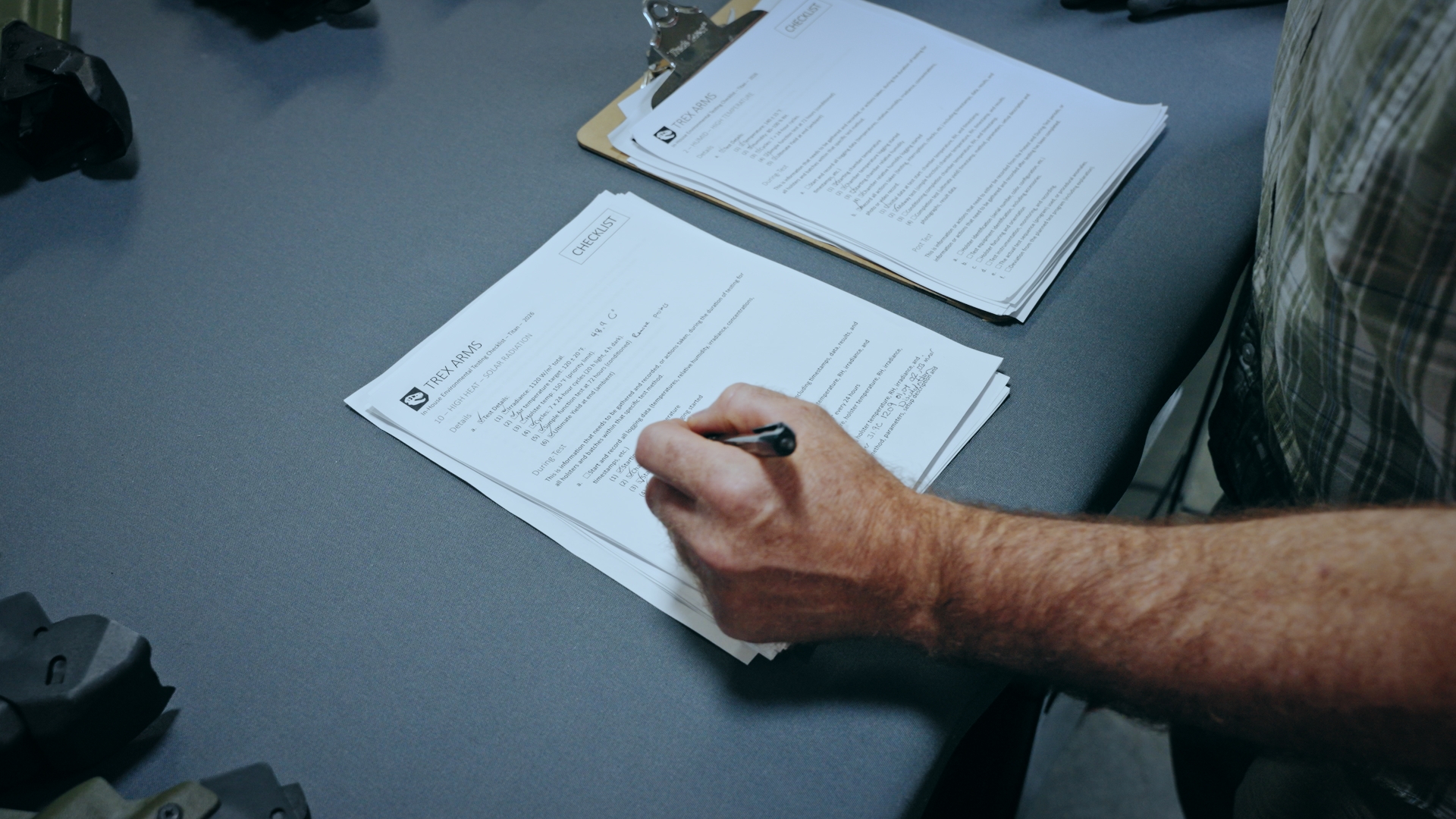
Direct sunlight can do significant damage to polymers, especially Kydex. We simulated direct sunlight spectrums and temperatures by placing the Titan under a full spectrum metal-halide lamp for 5 days. At the conclusion of the test there was discoloration and warpage to the Kydex body of the holster. However, even with the physical changes to the Kydex, the holster was still able to function. Ultimate load tests yielded significantly lower results, but still performed over the target threshold.
Combined Sequential — Cold / Hot / UV / Humid
Multi-Stress Cycling
- Cold
- −60 °F
- Hot
- 124 - 142 °F
- UV Irradiance
- 66 - 73 mW/cm²
- Relative Humidity
- 50% - 71% RH
- Conditioning Method
- Cold: 72 Hours; 5 x 24-Hour Cycles (20h light / 4 hr dark)
- Test Method(s)
- Simple Function Test, Ultimate Load Test
- Result(s)
- Function: Full Function
Ultimate Load: 183 - 444 lbf, avg 304 lbf
Result
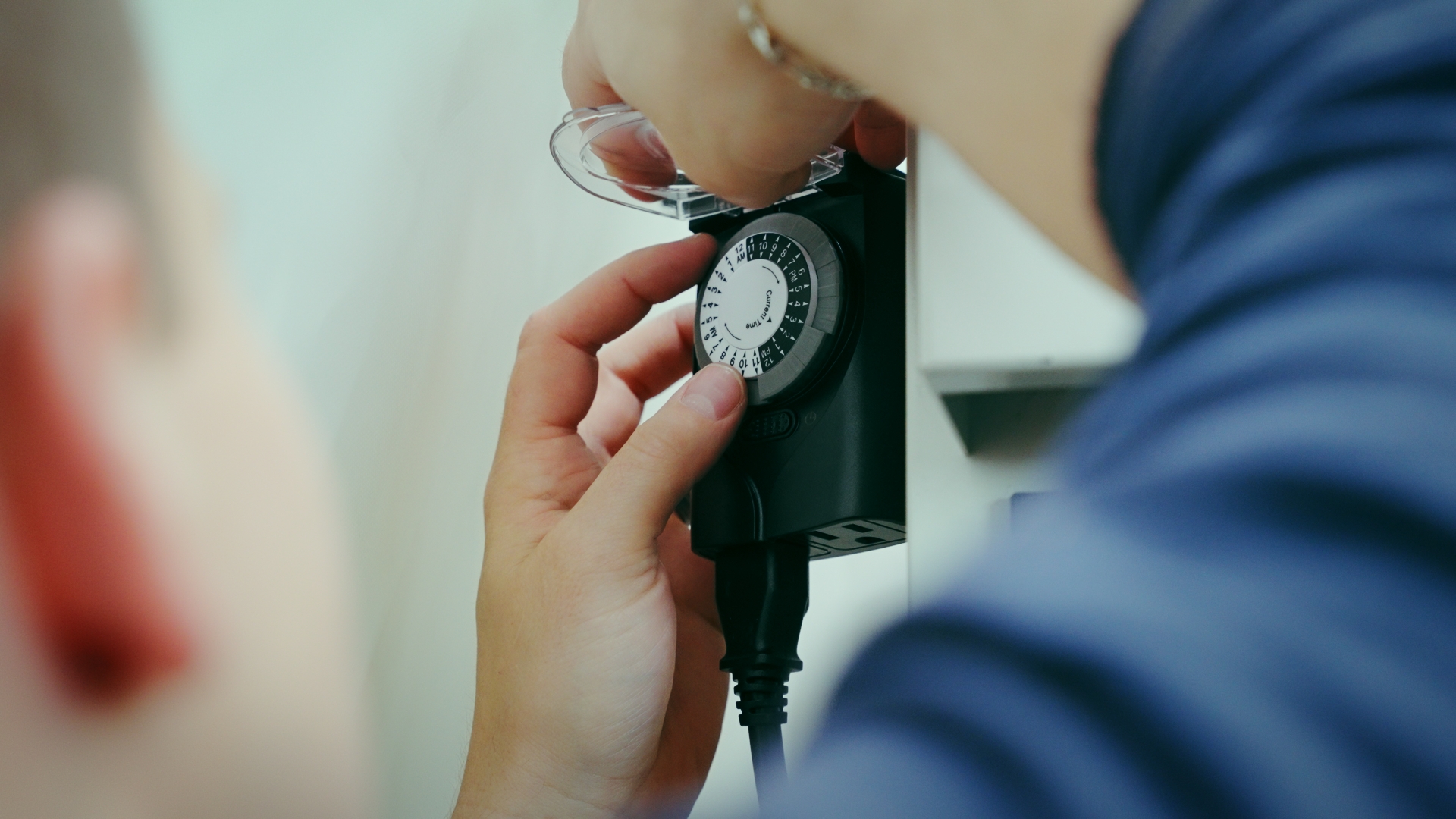
This test combined four major environmental tests—extreme cold, extreme heat, UV radiation, and high humidity—to test the performance of the polymers used to make the holster. Each test unit was subjected to over 300 hrs of tests.
Each test unit showed no degradation in function. Ultimate Load tests were significantly lower, but performance was still acceptable.
Water Immersion
Fluid Exposure
- Conditioning Method
- Immersion
- Test Method(s)
- Simple Function Test
- Result(s)
- Function: Full Function
Result
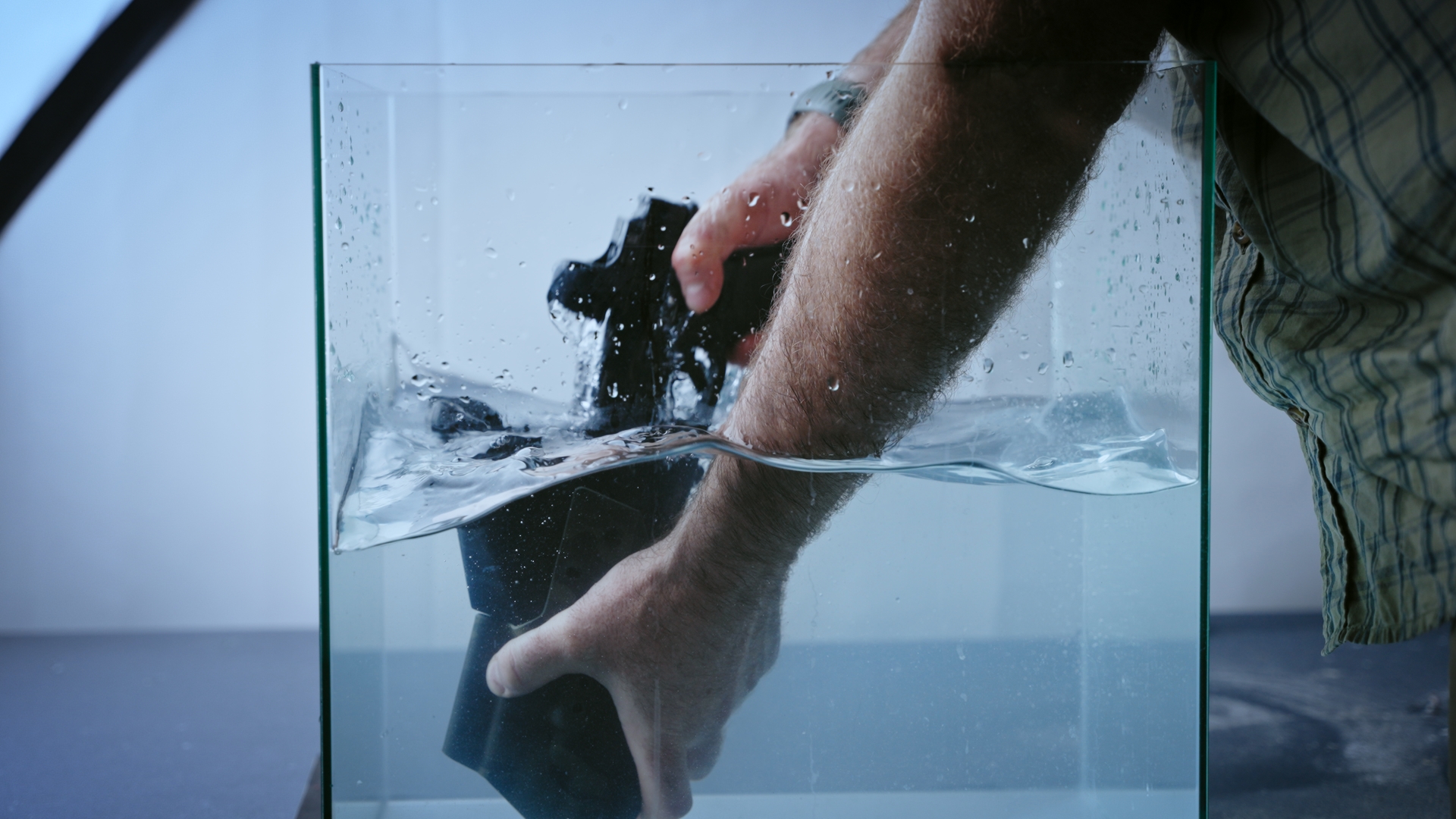
To verify that the Titan could unholster satisfactorily while completely submerged, we did repeated draws while completely underwater. No effect on functionality (surprise, surprise—we didn't expect anything different).