Lex Rex: The Law and the King by Samuel Rutherford
Books 9 
Related Products 3 
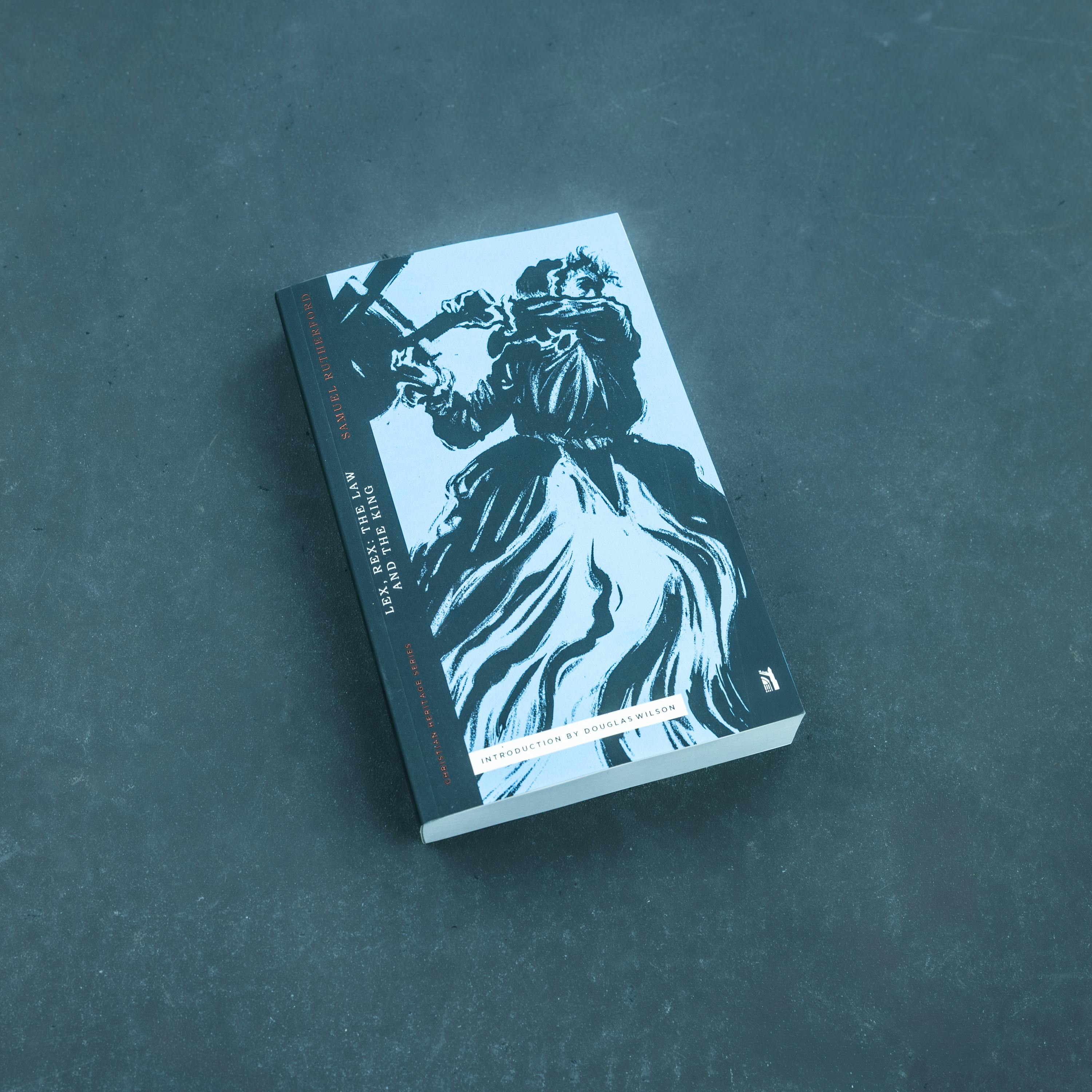
 | Lex Rex: The Law and the King by Samuel Rutherford Paperback | $27.95 |
In 1598, the English king James I wrote “The True Lawe of Free Monarchies,” a book declaring that a nation’s monarch has absolute authority over his subjects and is an unlimited sovereign. When his son Charles I inherited the throne, he took this position very seriously and began overruling Parliament, violating the rights of his citizens, and breaking many of England’s long-established laws.
In 1644, the Westminster pastor Samuel Rutherford published Lex Rex, making the case that the law is sovereign and that earthly monarchs are limited by it. Long recognized as one of the most outstanding books of political philosophy ever written, it directly motivated and guided the forces of Parliament and the English people who resisted Charles’ tyrannical rule during the bloody English Civil War.
When the Royalist armies were defeated, Charles I was put on trial and executed, based on the very principles outlined in this book. Rutherford makes a masterful case for the rights of the individual, the limits on civil government, and the responsibility to resist tyrants. After Rutherford’s death, Charles II ordered this book burned, but its spark has never died out; it was often referenced and relied upon by American Founders when they had to confront a similarly misguided monarch.
WHAT’S INCLUDED
- Lex Rex: The Law and the King by Samuel Rutherford – Paperback
SPECS
TABLE OF CONTENTS
- Introduction by Douglas Wilson
- Introduction by the Author
- Question 1: Whether government is warranted by a divine law
- Question 2: Whether or not government is warranted by the law of nature
- Question 3: Whether royal power and definite forms of government are from God
- Question 4: Whether or not the king is only and immediately from God, and not from the people
- Question 5: Whether or not the Popish Prelate, the author of Sacro-Sancta Regum Majestas, called The Sacred and Royal Prerogative of kings, proves that God is the immediate author of sovereignty, and that the king is no creature of the people’s making
- Question 6: Whether or not the king be so allenarly from both, in regard to the sovereignty and designation of his person, as he is no way from the people, but only by mere approbation
- Question 7: Whether the Popish Prelate conclude that neither constitution nor designation of kings is from the people
- Question 8: Whether or not the Popish Prelate proves, by force of reason, that people cannot be capable of any power of government
- Question 9: Whether or not sovereignty is so in and from the people, that they may resume their power in time of extreme necessity
- Question 10: Whether or not royal birth be equivalent to divine unction
- Question 11: Whether or not he be more principally a king who is a king by birth, or he who is a king by the free election of the people
- Question 12: Whether or not a kingdom may lawfully be purchased by the sole title of conquest
- Question 13: Whether or not royal dignity has its source from nature, and how it is true “every man is born free,” and how servitude is contrary to nature
- Question 14: Whether or not the people make a person their king conditionally or absolutely; and whether the king is tied by any such covenant
- Question 15: Whether the king be univocally, or only analogically and by proportion, a father
- Question 16: Whether or not a despotic or masterly dominion befits the king, because he is king
- Question 17: Whether or not the prince have properly the fiduciary or ministerial power of a tutor, husband, patron, minister, head, master of a family, not of a lord or dominator
- Question 18: What the law or manner of the king is (1 Sam. 8:9, 11) discussed fully
- Question 19: Whether or not the king be in dignity and power above the people
- Question 20: Whether inferior judges are essentially the immediate viceregents of God, as kings, not differing in essence and nature from kings
- Question 21: What power the people and states of parliament has over the king and in the state
- Question 22: Whether the power of the king as king is absolute, or dependent and limited by God’s first mold and pattern of a king
- Question 23: Whether the king has a royal prerogative above law
- Question 24: What relation the king has to the law
- Question 25: Whether the supreme law, the safety of the people, is above the king
- Question 26: Whether the king is above the law
- Question 27: Whether or not the king is the sole, supreme, and final interpreter of the law
- Question 28: Whether or not wars raised by the estates and subjects for their own just defense against the king’s bloody emissaries are lawful
- Question 29: Whether, in the case of defensive wars, the distinction of the person of the king as a man, who may and can commit hostile acts of tyranny against his subjects, and of the office and royal power that he has from God and the people, can have place
- Question 30: Whether or not passive obedience is a means to which we are subjected in conscience by virtue of a divine commandment, and what a means resistance is; that flying is resistance
- Question 31: Whether self-defense, by opposing violence to unjust violence, be lawful, by the law of God and nature
- Question 32: Whether or not the lawfulness of defensive wars can be proved from the Scripture from the examples of David, the people’s rescuing Jonathan, Elisha, and the eighty valiant priests who resulted Uzziah
- Question 33: Whether or not Rom. 13:1 argues anything against the lawfulness of defensive wars
- Question 34: Whether royalists prove by cogent reasons the unlawfulness of defensive wars
- Question 35: Whether the sufferings of the martyrs in the primitive church militant is against the lawfulness of defensive wars
- Question 36: Whether the king has the power of war only
- Question 37: Whether the estates of Scotland are to help their brethren, the Protestants of England, against cavaliers is proved by argument
- Question 38: Whether monarchy is the best of governments
- Question 39: Whether or not any prerogative at all above the law is due to the king, and whether jura majestatis is any such prerogative
- Question 40: Whether or not the people have any power over the king, either by his oath, covenant, or any other way
- Question 41: Whether the Popish Prelate with reason ascribes to us doctrine of Jesuits in the question of lawful defense
- Question 42: Whether all Christian kings are dependent from Christ, and may be called his viceregents
- Question 43: Whether the king of Scotland is an absolute prince, having a prerogative above laws and parliaments
- Question 44: General results of the former doctrine in some few corollaries, in twenty-two questions
TECHNICAL SPECIFICATIONS
| Size | 8.5″ x 5.5″ |
| Weight | 1lb 9.8oz |
| Length | 601 Pages |
| Construction | Paperback |